
This portrait depicts Joseph Lister, a pivotal figure in medical history widely regarded as the father of modern surgery. Before the mid-19th century, surgery was a high-risk endeavor, not just because of the procedures themselves, but because of the nearly inevitable postoperative infections that followed. Lister’s application of germ theory to clinical practice transformed the operating room from a place of dread into a controlled environment, drastically reducing mortality rates and paving the way for contemporary surgical standards.
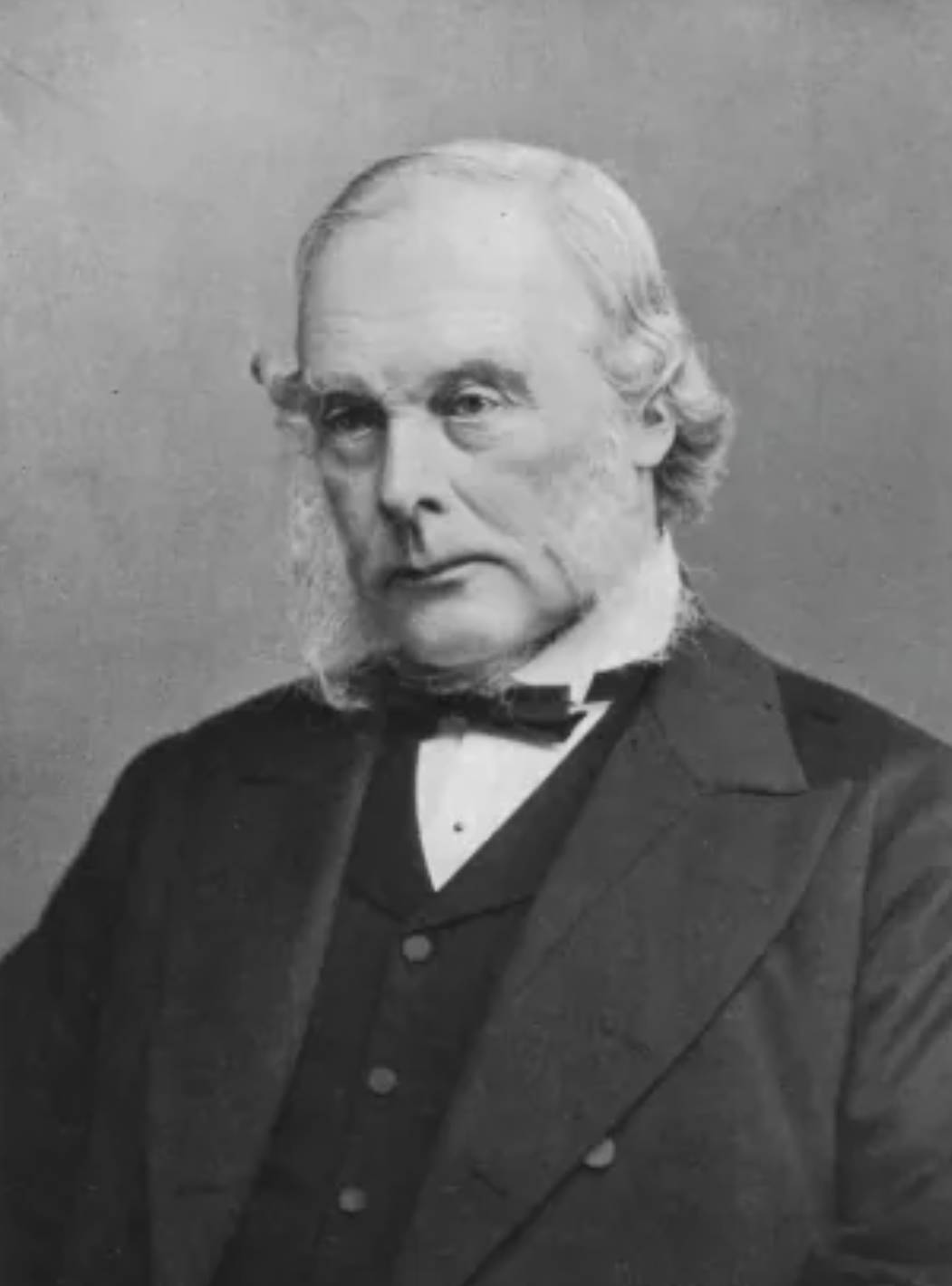
Image Overview
The image is a formal Victorian-era portrait of Joseph Lister (1827–1912). He is shown in a professional suit and bowtie, characteristic of a high-status medical academic of his time. His appearance, marked by distinctive sideburns and a focused, stoic expression, reflects the gravity of the medical revolution he led. While the image is a simple portrait, it represents the era in which surgery transitioned from an art of speed to a science of cleanliness. Lister’s work was the bridge between the old world of “laudable pus” and the modern world of sterile surgical fields.
Historical Context and Germ Theory
To understand the significance of this image, one must look at the state of Victorian medicine. In the 1860s, the prevailing belief was that wound infections were caused by “miasma”—bad air or chemical imbalances. Surgeons often moved from an autopsy to a living patient without washing their hands or instruments, believing that the odors of the hospital were the source of disease rather than invisible pathogens.
Lister’s breakthrough came from reading the works of Louis Pasteur, who demonstrated that fermentation and decay were caused by microorganisms. Lister hypothesized that these same microorganisms were responsible for the putrefaction (sepsis) seen in surgical wounds. By targeting these microbes, he believed he could prevent the deadly infections that claimed the lives of nearly half of all surgical patients at the time.
The Introduction of Carbolic Acid
Lister began experimenting with various chemicals to neutralize pathogens. He eventually settled on carbolic acid (phenol), a substance then used to treat sewage and reduce its odor. In 1865, he successfully used carbolic acid to treat a compound fracture, a condition that previously almost always resulted in amputation or death due to infection.
His antiseptic system included several key components:
- Wound Dressing: Applying carbolic acid-soaked lint directly to the wound to create a chemical barrier.
- Surgical Environment: Using a carbolic acid spray in the air around the operating table to kill airborne germs.
- Instrument Sterilization: Thoroughly cleaning surgical tools and the surgeon’s hands in a phenol solution.
From Antisepsis to Asepsis
While Joseph Lister is celebrated for antisepsis—the practice of using chemicals to kill germs already present—his work laid the necessary groundwork for asepsis. Asepsis is the practice of preventing germs from entering the surgical field in the first place through sterilization and barriers. As the medical community accepted his findings, the focus shifted from chemical sprays to the use of sterile gowns, gloves, and autoclaved instruments.
Lister’s methods initially met with significant skepticism from colleagues who found the germ theory difficult to believe and the carbolic spray irritating to their skin and lungs. However, the undeniable evidence of improved patient survival eventually made his protocols the global standard of care.
Clinical and Educational Importance
For modern medical students and healthcare professionals, Joseph Lister serves as a reminder of the importance of evidence-based practice. His willingness to apply laboratory science (microbiology) to clinical problems revolutionized patient outcomes. Today, every time a healthcare provider performs a surgical scrub or uses an alcohol swab, they are practicing a direct descendant of Lister’s original antiseptic principles.
Lister’s legacy is also visible in the terminology used in modern medicine. The genus of bacteria Listeria and the famous mouthwash brand Listerine were both named in his honor, reflecting his status as a pioneer in microbial control.
Key Learning Points
Medical learners should keep the following takeaways in mind when reflecting on Lister’s contributions:
- Scientific Integration: Lister demonstrated that clinical excellence is often driven by advancements in basic sciences, such as microbiology.
- Pathogen Control: The transition from treating infection to preventing infection (antisepsis to asepsis) is one of the most important developments in medical history.
- Outcome Measurement: Lister relied on data; by documenting the sharp decrease in mortality rates in his wards at the Glasgow Royal Infirmary, he provided the proof needed to change global medical culture.
The portrait of Joseph Lister is not merely a record of a famous man; it is a symbol of the moment medicine embraced the invisible world of microbiology to save human lives.
Medical Learning Tips
- Distinguish between antisepsis, which kills existing microbes, and asepsis, which prevents microbes from entering a sterile field.
- Recognize that Lister's application of carbolic acid was the first successful clinical use of germ theory in surgery.
- Observe how historical resistance to Lister's methods underscores the challenge of implementing paradigm-shifting medical evidence.


