
The hypothalamus pituitary complex is a critical system in the human body, orchestrating a wide array of physiological processes through its intricate connection between the brain and the endocrine system. This diagram provides a detailed view of the hypothalamus and its link to the pituitary gland, highlighting key anatomical structures involved in hormone regulation. Exploring this complex offers valuable insights into how the body maintains homeostasis, making it an essential topic for those interested in endocrinology and neurology.
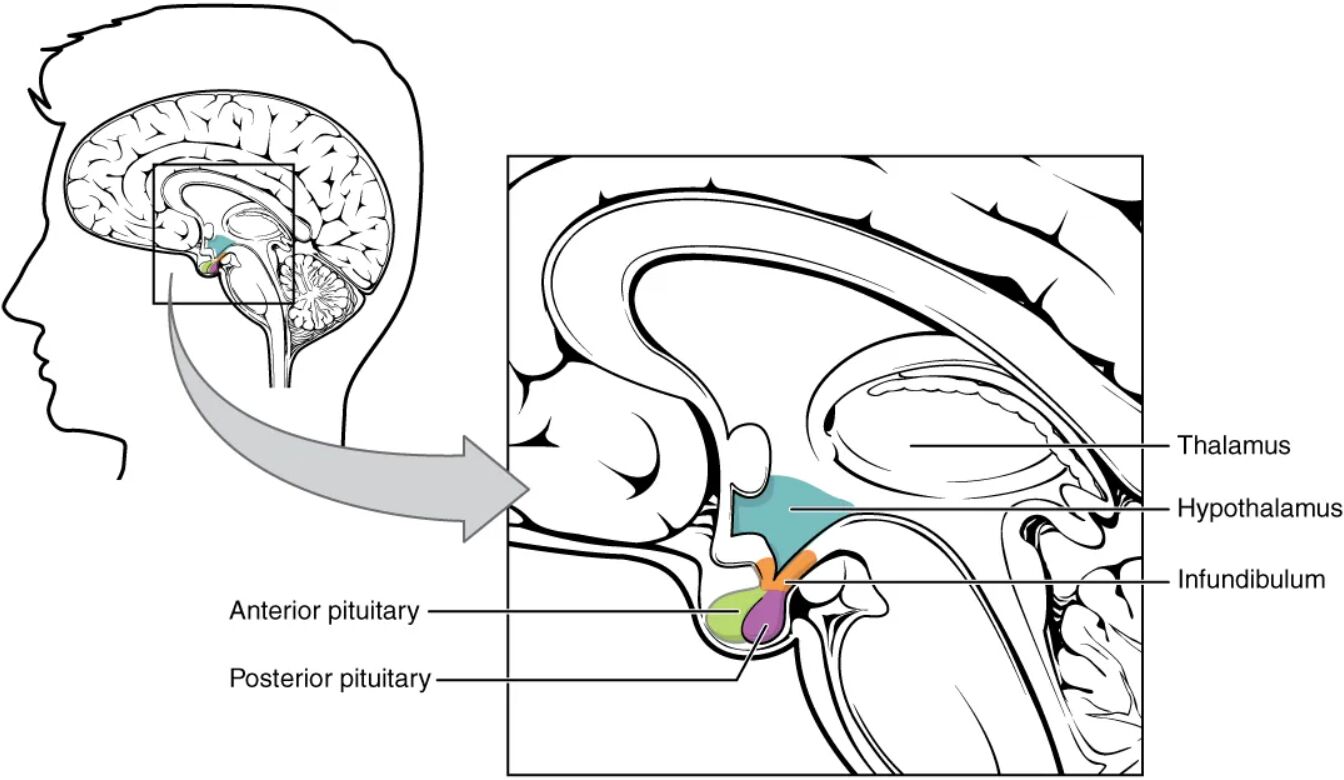
Anatomical Labels and Explanations
- Hypothalamus The hypothalamus is a small region of the brain located below the thalamus, playing a pivotal role in linking the nervous system to the endocrine system via the pituitary gland. It regulates essential functions such as body temperature, hunger, and hormone release by sending signals through the infundibulum.
- Thalamus Positioned above the hypothalamus, the thalamus acts as a relay station, transmitting sensory and motor signals to various parts of the brain. It collaborates with the hypothalamus to influence hormonal responses and maintain overall brain function.
- Infundibulum The infundibulum serves as a stalk-like structure connecting the hypothalamus to the pituitary gland, facilitating the transport of hormones and neural signals. This connection is vital for the communication between the brain and the endocrine system.
- Anterior pituitary The anterior pituitary, located at the front of the pituitary gland, produces and releases hormones such as growth hormone, thyroid-stimulating hormone (TSH), and adrenocorticotropic hormone (ACTH) in response to hypothalamic signals. These hormones regulate metabolism, growth, and stress responses throughout the body.
- Posterior pituitary The posterior pituitary, situated at the rear of the gland, stores and releases hormones like oxytocin and antidiuretic hormone (ADH) that are produced by the hypothalamus. These hormones are crucial for childbirth, lactation, and water balance in the body.
Detailed Article Content
Overview of the Hypothalamus Pituitary Complex
The hypothalamus pituitary complex is a cornerstone of the endocrine system, seamlessly integrating neural and hormonal functions. This intricate network begins with the hypothalamus, a small but mighty region nestled beneath the thalamus, which serves as the command center for hormone production and release.
- The hypothalamus monitors internal and external stimuli, triggering the pituitary gland to secrete hormones that influence nearly every organ system.
- Its connection to the pituitary via the infundibulum allows for precise control over bodily functions, including stress response and reproduction.
- The anterior pituitary synthesizes hormones like TSH, which stimulates the thyroid gland to release thyroid hormone (T3 and T4), essential for metabolism.
- The posterior pituitary’s role in releasing oxytocin supports uterine contractions during labor, showcasing its critical reproductive function.
Anatomical Structure and Location
The hypothalamus lies inferior and anterior to the thalamus, forming a vital part of the diencephalon. This strategic positioning allows it to interact closely with surrounding brain structures.
- The thalamus, located above, processes sensory input and relays it to the cerebral cortex, enhancing the hypothalamus’s regulatory capabilities.
- The infundibulum extends downward from the hypothalamus, acting as a conduit for hormonal transport to the pituitary gland.
- The pituitary gland itself is divided into the anterior and posterior lobes, each with distinct roles in hormone secretion and storage.
- This anatomical arrangement ensures efficient communication between the brain and the rest of the endocrine system.
Functions of the Hypothalamus
The hypothalamus is a multitasking hub, overseeing a range of autonomic functions with precision. Its ability to respond to changes in the body’s environment is remarkable.
- It controls body temperature by activating heat-conserving or dissipating mechanisms as needed.
- Hunger and satiety signals are regulated, ensuring energy balance through hormone release.
- The hypothalamus produces releasing and inhibiting hormones that direct the anterior pituitary’s activity.
- Its influence extends to the posterior pituitary, where it synthesizes ADH to regulate water retention in the kidneys.
Role of the Pituitary Gland
The pituitary gland, often dubbed the “master gland,” executes the hypothalamus’s directives with remarkable efficiency. Its dual-lobed structure enables diverse hormonal functions.
- The anterior pituitary releases TSH to stimulate thyroid hormone production, impacting metabolic rate.
- Growth hormone (GH) from the anterior pituitary promotes tissue growth and repair across the body.
- The posterior pituitary releases oxytocin, facilitating lactation and bonding behaviors post-delivery.
- ADH from the posterior pituitary helps prevent dehydration by reducing urine output.
Clinical Relevance and Hormonal Regulation
Understanding the hypothalamus pituitary complex is crucial for diagnosing and treating endocrine disorders. The interplay between these structures ensures hormonal balance.
- Dysregulation of the hypothalamus can lead to conditions like diabetes insipidus due to insufficient ADH.
- Overproduction of ACTH by the anterior pituitary may result in Cushing’s syndrome, characterized by excess cortisol.
- Thyroid dysfunction, linked to TSH imbalances, can cause hypothyroidism or hyperthyroidism.
- Proper function of this complex is essential for maintaining overall health and well-being.
Conclusion
The hypothalamus pituitary complex stands as a testament to the body’s intricate design, bridging the nervous and endocrine systems with finesse. This diagram illuminates the anatomical and functional relationships that sustain vital processes, from metabolism to reproduction. Delving into its mechanisms offers a deeper appreciation of human physiology and underscores the importance of this system in health and disease management


