
Mechanically gated channels are vital sensory proteins that respond to physical stimuli like pressure, touch, or temperature changes, enabling the body to perceive its environment. This diagram depicts how these channels open in response to mechanical alterations in surrounding tissues or shifts in local temperature, allowing ion movement to initiate nerve signals. Understanding this process sheds light on the intricate mechanisms behind tactile and thermal sensation.
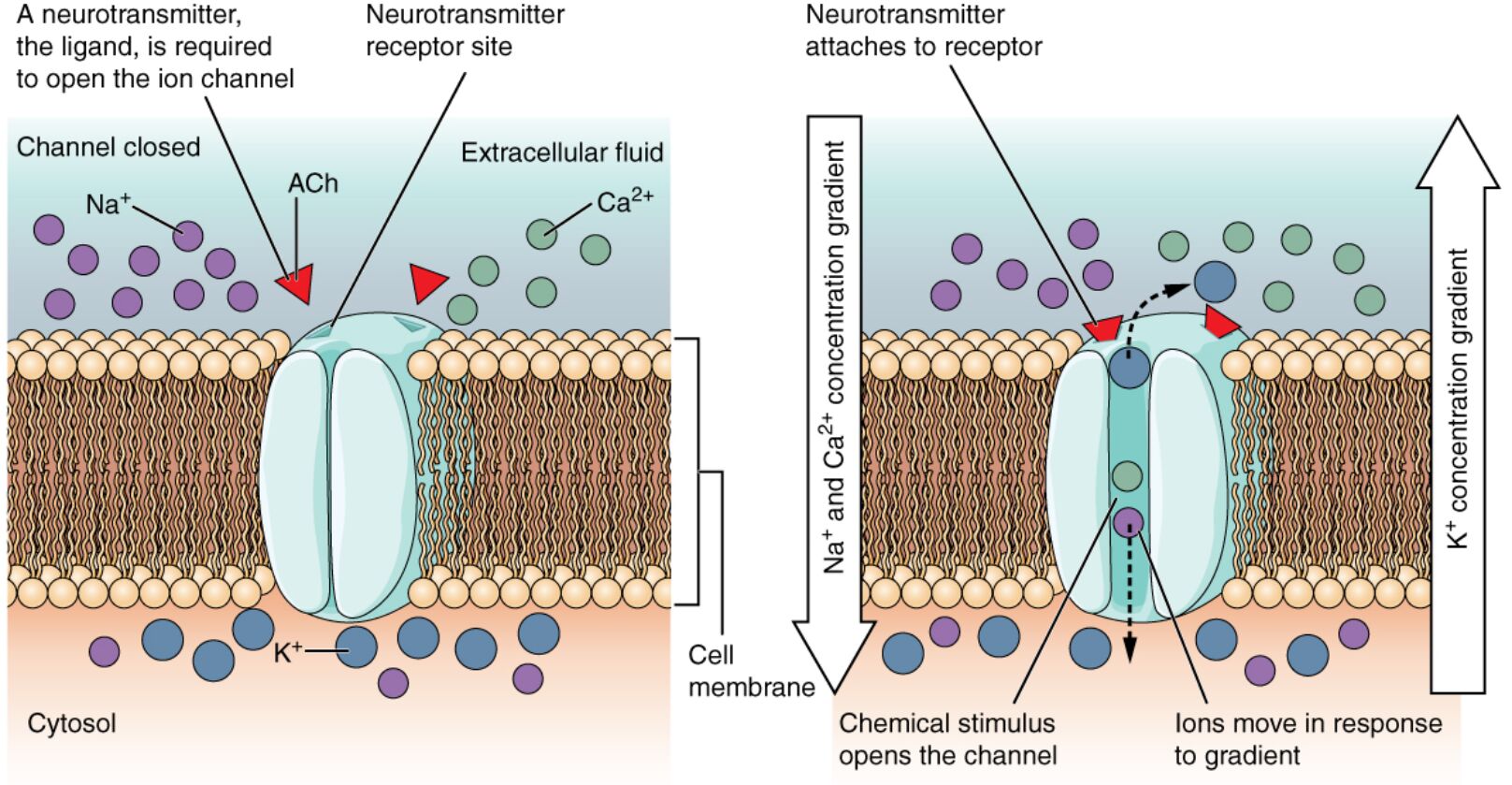
Key Labels in the Mechanically Gated Channels Diagram
This section provides detailed insights into each labeled component, highlighting their roles in sensory transduction.
Mechanical stimulus: This physical force, such as pressure or vibration, deforms the channel protein, prompting it to open and permit ion flow. It is the primary trigger for mechanoreceptors in skin, muscles, and joints.
Thermoreceptor: This protein responds to changes in local tissue temperature, opening the channel to allow ion passage when heat or cold is detected. It plays a crucial role in thermoregulation and temperature perception.
Channel protein: This transmembrane protein alters its shape under mechanical or thermal influence, creating a pore for ions to cross the membrane. Its activation is essential for converting physical stimuli into electrical signals.
Extracellular space: The region outside the cell where mechanical or thermal stimuli are applied, influencing the channel protein’s conformation. It serves as the initial point of sensory input.
Cytoplasm: The internal cell environment where ions enter after the channel opens, triggering downstream cellular responses. It is where sensory signals are processed and transmitted.
Ion flow: The movement of ions, such as sodium or potassium, through the open channel, generating an electrical current for nerve signaling. This flow is critical for sensory perception and response.
Cell membrane: The lipid bilayer that embeds the channel protein, providing a selective barrier for ion movement. It maintains the structural framework for sensory transduction.
Mechanism of Mechanically Gated Channels
Mechanically gated channels convert physical stimuli into electrical signals. They are fundamental to sensory physiology.
- Mechanical stimulus, like touch or stretch, physically opens the channel protein.
- Thermoreceptor activation occurs with temperature changes, altering protein structure.
- The opened channel protein facilitates ion flow across the cell membrane.
- This generates a receptor potential, initiating nerve impulses.
- The response is rapid, adapting to the stimulus’s intensity.
Role of Mechanical Stimulus in Sensory Function
Mechanical stimulus drives the detection of physical interactions. It underpins various sensory experiences.
- Pressure or vibration acts as a mechanical stimulus to activate channels.
- Mechanoreceptors in the skin, such as Pacinian corpuscles, respond to this stimulus.
- It supports touch sensation, proprioception, and hearing via hair cells.
- The sensitivity varies with receptor location and stimulus type.
- Chronic pressure can lead to receptor desensitization.
Function of Thermoreceptors in Temperature Regulation
Thermoreceptors enable the body to sense and respond to thermal changes. They maintain thermal homeostasis.
- Temperature shifts trigger thermoreceptor opening in response to heat or cold.
- These channels are located in free nerve endings and hypothalamic neurons.
- They initiate reflexes like sweating or shivering to regulate body temperature.
- Different thermoreceptors detect specific temperature ranges.
- Impaired function can result in temperature insensitivity.
Structural and Functional Dynamics
The cell membrane and channel protein provide the structural basis for sensory detection. Their interaction is key to function.
- The cell membrane anchors the channel protein, ensuring stability.
- Extracellular space transmits the mechanical stimulus or thermal change.
- Cytoplasm receives ion flow, propagating the sensory signal.
- Channel proteins feature mechanosensitive domains that respond to force.
- Thermal sensitivity involves heat-induced conformational changes.
Physiological Significance and Clinical Insights
Mechanically gated channels have wide-ranging physiological roles. Their study informs medical practice.
- Ion flow from mechanical stimulus supports balance and auditory function.
- Thermoreceptor dysfunction is associated with neuropathies or burns.
- Hearing loss can stem from damage to these channels in the cochlea.
- Physical therapy leverages these channels for sensory recovery.
- Research into mechanosensitive mutations guides therapeutic strategies.
In conclusion, the mechanically gated channels diagram illustrates how mechanical stimulus and thermoreceptor activation open the channel protein, enabling ion flow across the cell membrane. This process connects the extracellular space to the cytoplasm, facilitating the perception of touch, pressure, and temperature. Grasping these mechanisms enhances our understanding of sensory physiology and its clinical applications.


