
Chloroplasts are specialized organelles found in plant cells and eukaryotic algae that conduct photosynthesis, transforming light energy into chemical energy. This complex double-membrane structure houses the biochemical pathways essential for oxygen production and organic molecule synthesis, serving as the biological engine for life on Earth. By understanding the intricate anatomy of these organelles, we gain insight into the fundamental processes that sustain global food chains and regulate atmospheric composition.
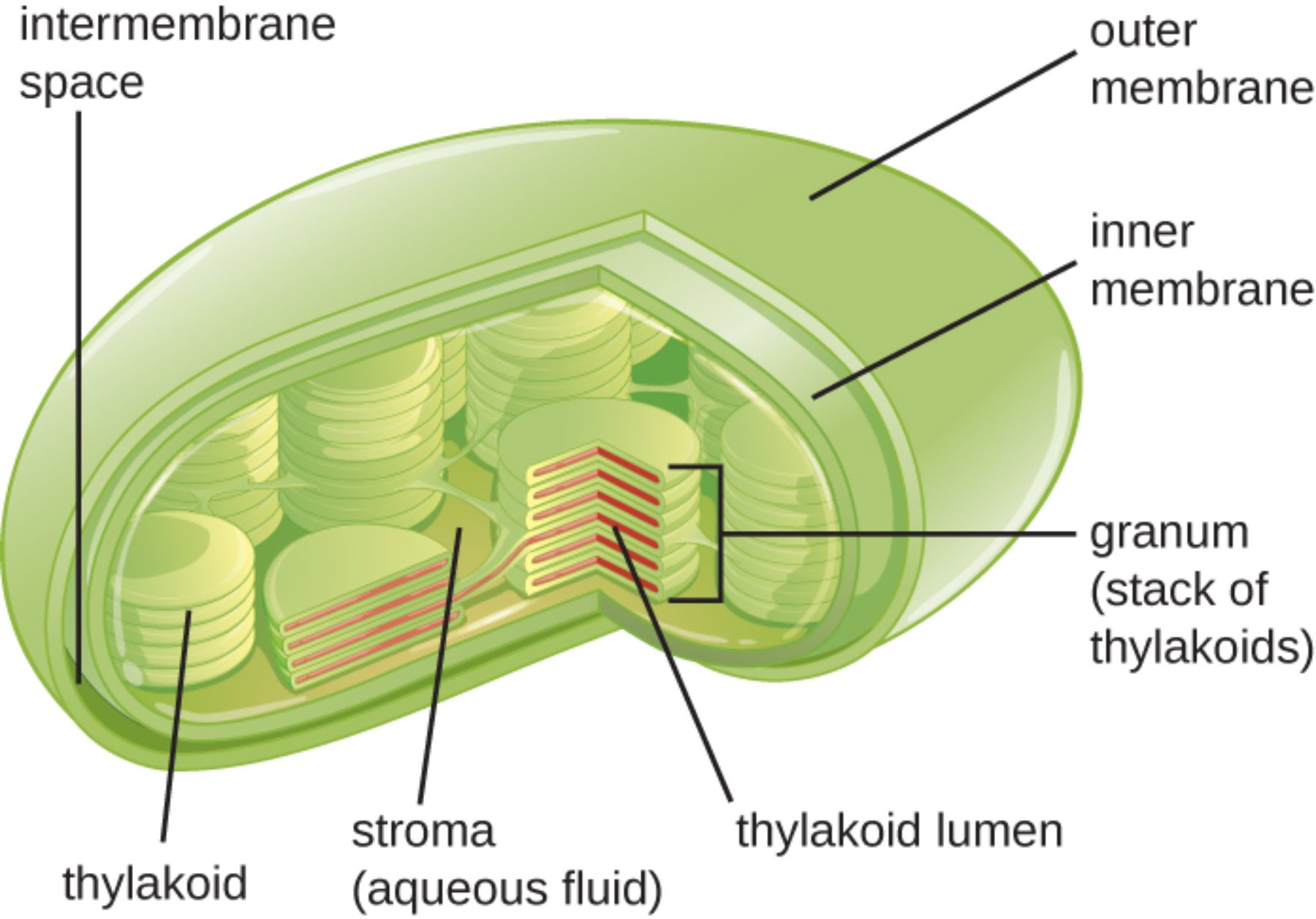
intermembrane space: This is the narrow region located between the outer and inner membranes of the chloroplast. It facilitates the transport of proteins and metabolites between the cytosol and the interior of the organelle.
thylakoid: A thylakoid is a disk-like, membrane-bound compartment that contains chlorophyll and other proteins. It is the specific site where light-dependent reactions occur, capturing photons to initiate the conversion of energy.
stroma (aqueous fluid): The stroma is the protein-rich alkaline fluid that fills the space within the inner membrane but outside the thylakoid stacks. It houses the enzymes necessary for the Calvin cycle, where carbon dioxide is converted into glucose.
thylakoid lumen: This is the interior space enclosed by the thylakoid membrane. It serves as a reservoir for protons, allowing for the generation of a concentration gradient used to drive the production of chemical energy.
granum (stack of thylakoids): A granum consists of several thylakoids stacked on top of each other, resembling a pile of coins. This arrangement increases the surface area for light absorption, thereby maximizing the efficiency of the photosynthetic process.
inner membrane: This membrane serves as a selective barrier, regulating the passage of molecules into and out of the stroma. It contains specialized transporters that manage the exchange of ions and metabolic precursors required for cellular function.
outer membrane: The outer membrane is the smooth exterior layer that encloses the entire chloroplast organelle. It is highly permeable to small molecules and ions due to the presence of porins, facilitating communication with the rest of the plant cell.
Chloroplasts are members of a class of organelles known as plastids, which are characterized by their double-membrane system and the presence of their own genome. While they are primarily recognized for their role in photosynthesis, they are also involved in the synthesis of fatty acids, amino acids, and the immune response of plants. The unique structure of the chloroplast, particularly its internal membrane systems, allows for the physical separation of various biochemical processes, ensuring a high level of metabolic efficiency.
The evolutionary origin of chloroplasts is widely attributed to the endosymbiotic theory, which suggests that a photosynthetic cyanobacterium was engulfed by a primitive eukaryotic cell. This ancient partnership provided the host cell with the ability to harness solar energy, a transition that fundamentally altered the Earth’s atmosphere by increasing oxygen levels. Today, the study of chloroplasts is not only vital for plant biology but also for understanding global carbon cycles and developing sustainable solutions for food production.
Key characteristics of chloroplasts include:
- Possession of a semi-autonomous circular DNA genome.
- Utilization of various photosynthetic pigments to absorb specific wavelengths of light.
- Synthesis of ATP and NADPH as intermediates in energy conversion.
- Regulation of plant stress responses through internal signaling pathways.
Beyond energy production, chloroplasts act as sensory hubs for the plant. They perceive environmental changes such as light intensity and temperature, adjusting their internal chemistry to prevent damage from photo-oxidation. This adaptability is crucial for the survival of vegetation in fluctuating ecosystems and has profound implications for agricultural science. The precise coordination between the stroma and the thylakoids ensures that plants can thrive even in challenging environmental conditions.
The physiological function of the chloroplast is divided into two main stages: the light-dependent reactions and the light-independent reactions (Calvin cycle). During the light-dependent phase, pigments within the thylakoid membrane capture sunlight to split water molecules, releasing oxygen as a byproduct. This process generates high-energy molecules that are subsequently utilized in the aqueous stroma to drive the synthesis of carbohydrates.
In the stroma, the Calvin cycle utilizes carbon fixation to transform inorganic CO2 into organic sugars. This process relies heavily on the enzyme Rubisco, which is responsible for the initial step of carbon entry into the biosphere. The sugars produced are either used immediately for the plant’s metabolic needs or stored as starch within the chloroplast for future use, providing a stable energy source during periods without sunlight.
In conclusion, the chloroplast is a highly organized organelle that serves as the nexus of energy for terrestrial and aquatic ecosystems. From its protective outer layers to the complex internal stacks of grana, every part is optimized for the capture and conversion of solar energy. Continued research into these structures offers promising insights into enhancing crop resilience and understanding the broader impacts of environmental changes on plant physiology and global health.


