
Microtubules are essential components of the cell’s cytoskeleton, forming dynamic hollow tubes that provide structural support and enable critical processes like intracellular transport and cell division. Composed of tubulin dimers, these structures allow motor proteins to move organelles and vesicles efficiently throughout the cytoplasm, maintaining cellular organization and function.
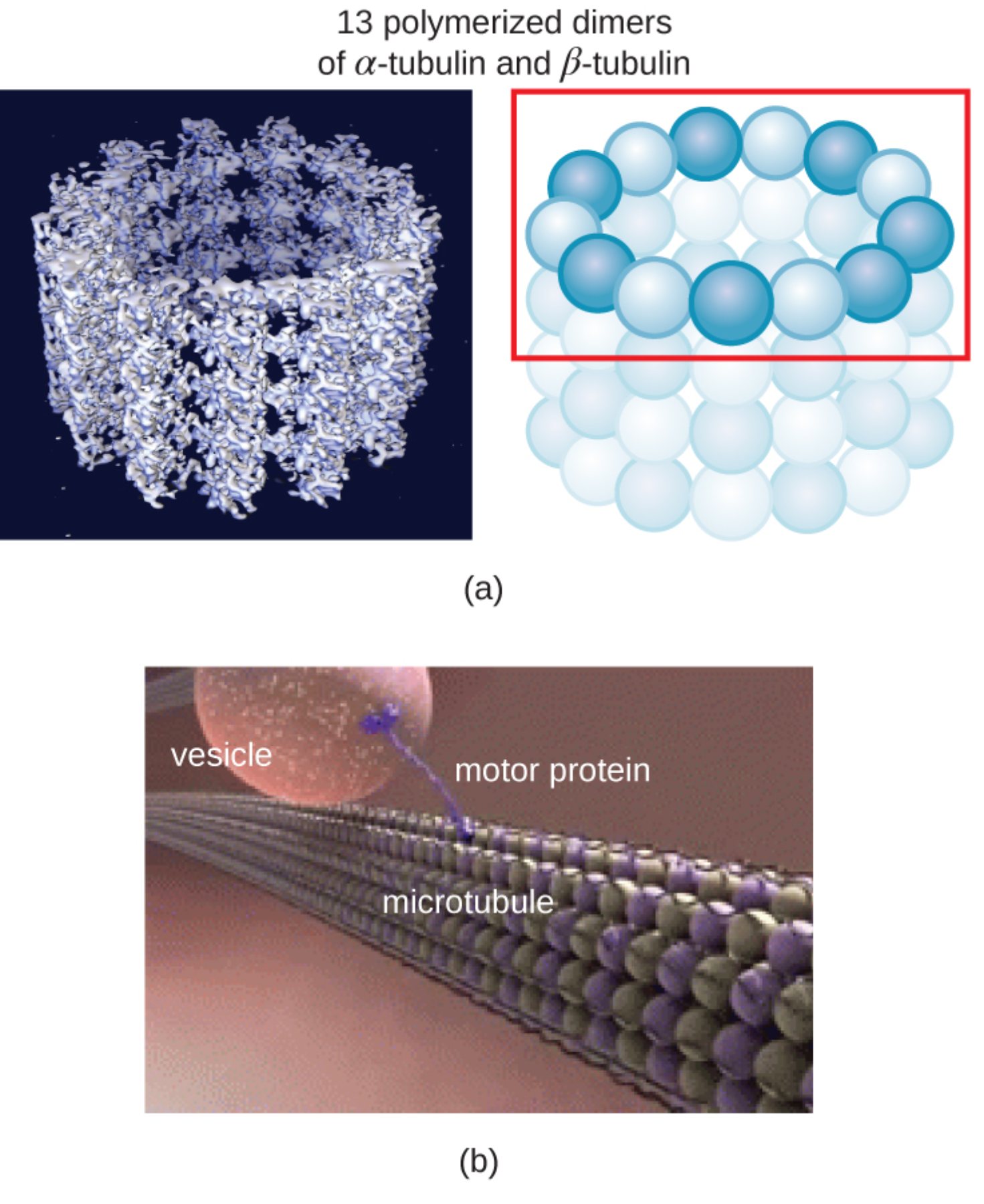
Key Labeled Elements in the Microtubule Diagram
13 polymerized dimers of α-tubulin and β-tubulin These dimers form the basic building blocks of microtubules. Alpha (α) and beta (β) tubulin proteins combine to create heterodimers that polymerize head-to-tail into linear protofilaments, typically 13 of which arrange laterally to form the hollow cylindrical structure of a microtubule. This specific arrangement of 13 protofilaments gives microtubules their characteristic stability and polarity, with a plus end where rapid growth occurs and a minus end that is more stable.
Vesicle Vesicles are membrane-bound sacs that transport proteins, lipids, and other molecules within the cell. In the context of microtubules, vesicles act as cargo that needs to be moved from one part of the cell to another, such as from the cell body to the periphery in neurons or during secretion processes. Efficient vesicle transport is vital for cellular homeostasis, ensuring timely delivery of essential materials.
Motor protein Motor proteins, such as kinesin and dynein, are specialized molecules that “walk” along microtubules using ATP energy to transport cargo. Kinesin typically moves toward the plus end of the microtubule (anterograde transport), carrying vesicles away from the cell center, while dynein moves toward the minus end (retrograde transport). This directional movement allows precise distribution of organelles and materials across the cell.
Microtubule Microtubules are rigid, hollow tubes approximately 25 nm in diameter, serving as tracks for intracellular transport and providing structural rigidity to the cell. They exhibit dynamic instability, rapidly assembling and disassembling to adapt to cellular needs, and their polarity enables directed movement of motor proteins and attached cargo.
Microtubules play a fundamental role in eukaryotic cells, forming part of the cytoskeleton alongside actin filaments and intermediate filaments. Their unique structure, built from α- and β-tubulin dimers arranged into 13 protofilaments, creates a polarized tube that supports both stability and dynamic changes. This polarity is crucial for functions like chromosome separation during mitosis and the transport of vesicles across long distances in the cytoplasm.
In cellular transport, motor proteins like kinesin and dynein bind to microtubules, converting chemical energy from ATP into mechanical work to move organelles efficiently. This system is particularly important in elongated cells, such as neurons, where materials must travel over significant distances. Disruptions in microtubule function can impair these processes, leading to cellular dysfunction.
Key functions of microtubules include:
- Providing structural support and maintaining cell shape
- Facilitating intracellular transport of vesicles and organelles
- Forming the mitotic spindle for chromosome segregation during cell division
- Contributing to cell motility through structures like cilia and flagella
From a medical perspective, microtubules are prime targets for chemotherapy because rapidly dividing cancer cells rely heavily on them for mitosis. Drugs that interfere with microtubule dynamics, such as taxanes (e.g., paclitaxel), stabilize microtubules and prevent disassembly, while vinca alkaloids (e.g., vincristine) inhibit polymerization. These agents halt cell division, leading to apoptosis in cancer cells, and are widely used in treating breast, lung, and ovarian cancers, as well as lymphomas.
Microtubules also have implications in neurodegenerative diseases. In Alzheimer’s disease, abnormal hyperphosphorylation of tau protein—a microtubule-associated protein—leads to tau tangles that destabilize microtubules, impairing axonal transport and contributing to neuronal death. Understanding microtubule dynamics continues to drive research into targeted therapies for both cancer and neurological conditions.
In summary, microtubules are dynamic and versatile structures indispensable for cellular integrity and function. Their involvement in transport, division, and signaling underscores their importance in health and disease, making them a focal point for innovative medical interventions that improve patient outcomes.


