
Discover the fascinating anatomy of the tongue with this superior view, detailing the various types of lingual papillae and associated structures. Learn how these intricate components contribute to taste perception, speech, and the initial stages of digestion, providing a comprehensive understanding of this vital oral organ.
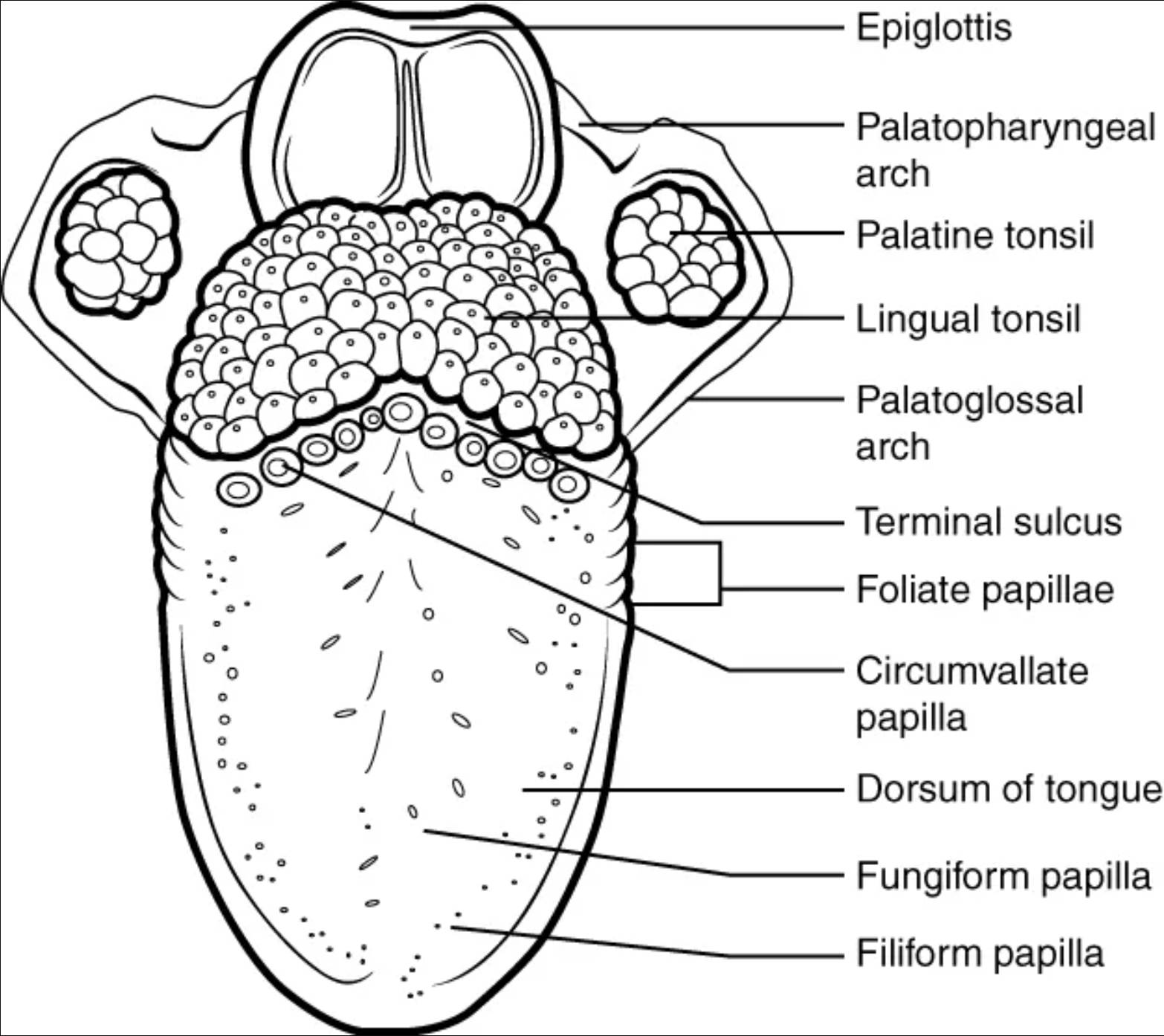
The tongue is a remarkably versatile muscular organ, playing indispensable roles in taste, speech, and the initial mechanical processing of food. Its superior surface, or dorsum, is characterized by numerous small projections called lingual papillae, which house the taste buds responsible for our sense of taste. This detailed anatomical overview provides a superior perspective, illuminating the intricate organization of the tongue and its critical contributions to overall oral and digestive health.
Epiglottis: The epiglottis is a leaf-shaped flap of cartilage located at the base of the tongue, guarding the entrance to the larynx. Its crucial function is to fold over the glottis during swallowing, preventing food and liquid from entering the trachea and lungs.
Palatopharyngeal arch: This fold of mucous membrane extends from the soft palate to the lateral wall of the pharynx. It forms the posterior boundary of the fauces and assists in sealing off the nasopharynx during the swallowing process.
Palatine tonsil: Located between the palatoglossal and palatopharyngeal arches, the palatine tonsils are prominent lymphoid organs. They are part of the immune system, acting as a defense mechanism against pathogens entering the body through the mouth.
Lingual tonsil: Situated at the posterior base of the tongue, the lingual tonsil consists of numerous lymphoid nodules. It contributes to the body’s immune surveillance, particularly against orally introduced microbes.
Palatoglossal arch: This arch is a fold of mucous membrane that stretches from the soft palate to the lateral aspect of the tongue. It marks the anterior boundary of the fauces, the opening from the oral cavity into the oropharynx.
Terminal sulcus: The terminal sulcus is a V-shaped groove on the posterior dorsum of the tongue, separating the anterior two-thirds (oral part) from the posterior one-third (pharyngeal part). It serves as an important anatomical landmark on the tongue’s surface.
Foliate papillae: These are leaf-like papillae located on the lateral margins of the posterior tongue. They contain taste buds and are involved in the perception of taste, particularly during chewing.
Circumvallate papilla: These are large, circular papillae arranged in a V-shape anterior to the terminal sulcus. Each circumvallate papilla is surrounded by a trench and contains numerous taste buds, playing a significant role in taste perception.
Dorsum of tongue: The dorsum is the superior surface of the tongue, characterized by its rough texture due to the presence of various types of lingual papillae. This surface is highly involved in manipulating food, speech, and taste.
Fungiform papilla: These mushroom-shaped papillae are scattered over the anterior two-thirds of the tongue, particularly on the tip and sides. They typically contain a few taste buds and also contribute to the tongue’s tactile sensation.
Filiform papilla: These are the most numerous type of papillae, covering the anterior two-thirds of the tongue. Unlike other papillae, filiform papillae do not contain taste buds; their primary function is mechanical, providing a rough surface for gripping food.
The Tongue’s Multifaceted Role in Oral Physiology
The tongue, a highly agile muscular organ, is far more complex than it appears at first glance. Its intricate anatomical design allows it to perform a myriad of functions essential for daily life, ranging from the fundamental acts of eating and speaking to nuanced sensory perception. Beyond its muscular core, the surface of the tongue, known as the dorsum, is uniquely textured with various types of lingual papillae, each contributing to its diverse capabilities.
The primary functions of the tongue can be categorized into several key areas:
- Taste Perception: Housing the taste buds within specific papillae, allowing us to detect sweet, sour, salty, bitter, and umami flavors.
- Mastication and Swallowing: Manipulating food during chewing, forming it into a bolus, and initiating the swallowing reflex by pushing it towards the pharynx.
- Speech Articulation: Modifying the airflow from the lungs to produce a wide range of sounds necessary for clear speech.
- Oral Hygiene: Sweeping food debris from the teeth and gums, aiding in the self-cleaning process of the mouth.
- Emotional Expression: Contributing to various facial expressions and gestures.
The lingual papillae, which give the tongue its characteristic rough texture, are integral to these functions. While filiform papillae are primarily mechanical, aiding in friction and food manipulation, the fungiform, foliate, and circumvallate papillae are home to taste buds. These specialized sensory receptors allow us to distinguish between different tastes, enriching our dining experience and providing crucial feedback about the foods we consume. Furthermore, the posterior region of the tongue houses lymphoid tissues like the lingual tonsil, which are part of the immune system, acting as a first line of defense against pathogens. The precise coordination of these anatomical structures and their physiological roles underscores the tongue’s critical importance in both digestion and communication.
Understanding the detailed anatomy of the tongue provides valuable insight into its pivotal role in human physiology. This organ is not merely a muscle for moving food, but a sophisticated sensory and motor apparatus integral to our ability to taste, speak, and digest. Its complex arrangement of papillae, taste buds, and lymphoid tissues highlights its significance as both a digestive accessory organ and a crucial component of the immune system.


