
Purple and green sulfur bacteria are remarkable microorganisms that perform photosynthesis using specialized pigments known as bacteriochlorophylls. Unlike plants, these bacteria do not produce oxygen, relying instead on sulfur compounds to fuel their metabolic processes in anaerobic environments. This article explores the unique physiological adaptations and anatomical features that allow these bacteria to thrive in environments where sunlight is limited and oxygen is absent.
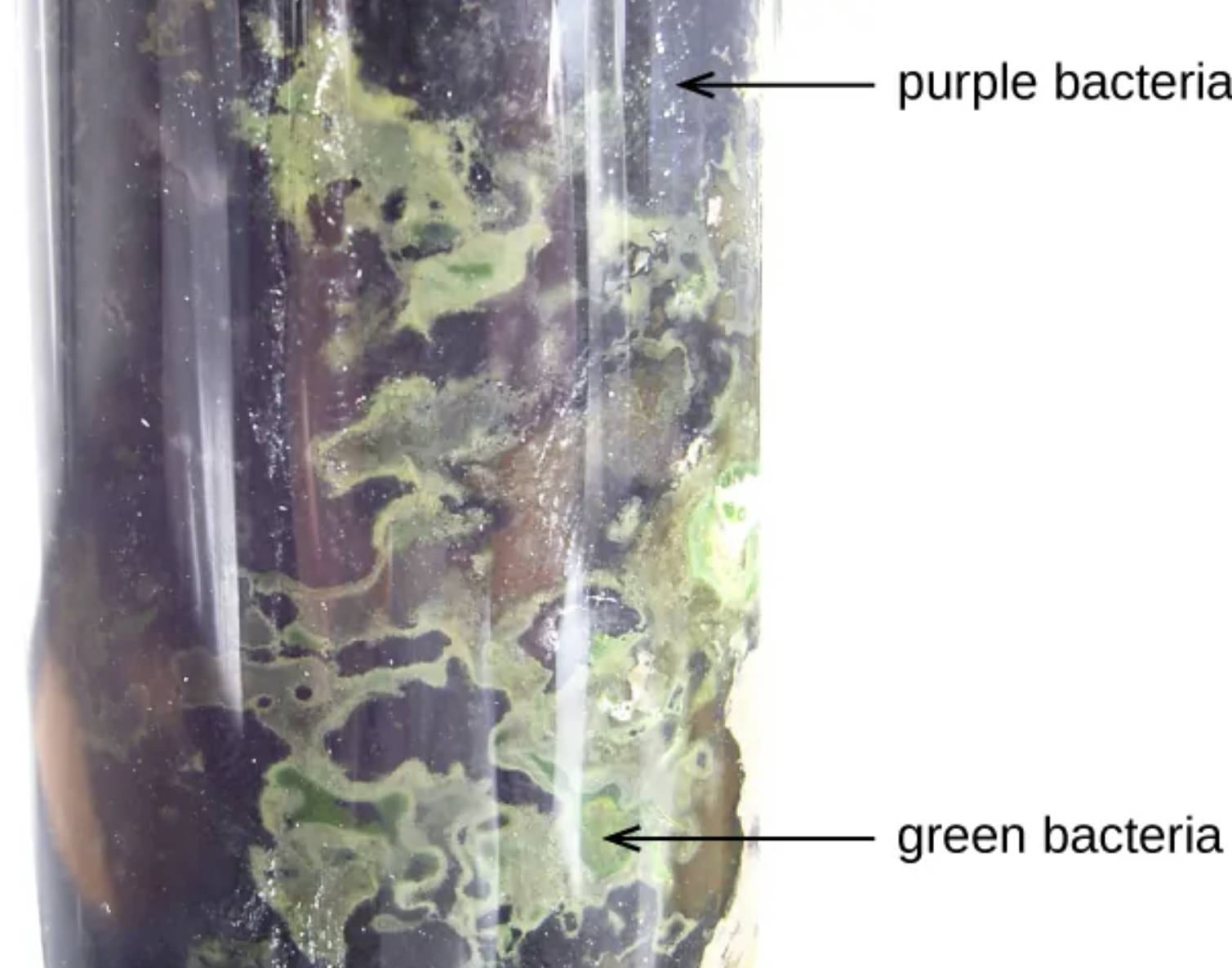
purple bacteria: These organisms belong to a group of proteobacteria that utilize bacteriochlorophylls a or b to capture light energy. They are often found in the upper, more light-exposed layers of anaerobic environments where they perform photosynthesis using hydrogen sulfide as an electron donor.
green bacteria: These are typically Green Sulfur Bacteria (GSB) that contain bacteriochlorophylls c, d, or e housed within specialized light-harvesting antennas. They are adapted to survive in extremely low-light conditions and are usually situated below the purple bacterial layers in microbial mats or stagnant water.
The image showcases a classic microbial ecosystem, often referred to as a Winogradsky column, where different species of bacteria stratify based on their specific metabolic needs and light preferences. At the heart of this system are the phototrophic sulfur bacteria, which have evolved the ability to harvest light energy without the release of oxygen—a process known as anoxygenic photosynthesis. These organisms play a vital role in global sulfur and carbon cycles, particularly in stagnant ponds, hot springs, and marine sediments where oxygen is scarce.
The primary physiological adaptation of these bacteria is the presence of bacteriochlorophylls. These pigments are structurally related to the chlorophyll found in plants but are tuned to absorb longer wavelengths of light, often in the infrared spectrum. This allows purple and green bacteria to inhabit niches deep underwater or beneath layers of other organisms where visible light is filtered out, effectively avoiding direct competition with oxygenic phototrophs like algae and cyanobacteria.
Key features of these anaerobic phototrophs include:
- Use of reduced sulfur compounds (like
H2SH2S) or organic acids as electron donors instead of water.
- Highly specialized internal membrane systems to maximize the efficiency of light absorption.
- Ability to thrive in stagnant, oxygen-depleted (anaerobic) zones of aquatic environments.
- Production of elemental sulfur as a metabolic byproduct, often stored as internal or external granules.
Anatomical Specializations and Light Harvesting
The anatomical organization of these bacteria is highly specialized to meet their unique energetic demands. Purple sulfur bacteria often possess extensive internal membranes formed by the invagination of the cytoplasmic membrane. These membranes increase the surface area available for the photosynthetic apparatus, which includes the reaction center and light-harvesting complexes. In contrast, green sulfur bacteria utilize chlorosomes, which are the most efficient light-harvesting antennas found in nature. These ellipsoidal structures contain thousands of bacteriochlorophyll molecules that are not bound to proteins, allowing the bacteria to grow in light intensities so low that no other photosynthetic life can survive.
The physiology of these bacteria is intrinsically linked to the chemical composition of their environment. In the presence of light and hydrogen sulfide, they perform carbon fixation, converting inorganic carbon dioxide into organic matter. This process is essential for supporting the broader microbial community in anaerobic niches. Furthermore, their ability to transform toxic hydrogen sulfide into elemental sulfur or sulfate provides a critical detoxification service for the ecosystem, balancing the chemical health of stagnant water bodies.
Understanding the diversity of bacteriochlorophylls has significant implications for biotechnology and bioenergy research. Scientists study these pigments to develop more efficient solar energy conversion systems and to better understand the early history of life on Earth when the atmosphere was devoid of oxygen. By examining how these organisms partition themselves based on light wavelength and sulfur concentration, we gain a deeper appreciation for the resilience and chemical complexity of the microbial world.
Purple and green sulfur bacteria represent a fascinating branch of the tree of life, showcasing the incredible versatility of bacterial metabolism. Through the use of bacteriochlorophylls and specialized anatomical structures, they have mastered the art of surviving in environments that are hostile to most other life forms. Their contribution to the global nutrient cycle highlights the hidden but essential role of microbes in maintaining the delicate balance of our planet’s ecosystems.


