
High G+C Gram-positive bacteria, belonging to the Actinobacteria phylum, represent a diverse group of microorganisms ranging from harmless commensals to deadly human pathogens. Understanding the unique morphological characteristics and clinical manifestations of species such as Actinomyces israelii, Corynebacterium diphtheriae, and Gardnerella vaginalis is essential for modern medical diagnostics and the treatment of complex infectious diseases.
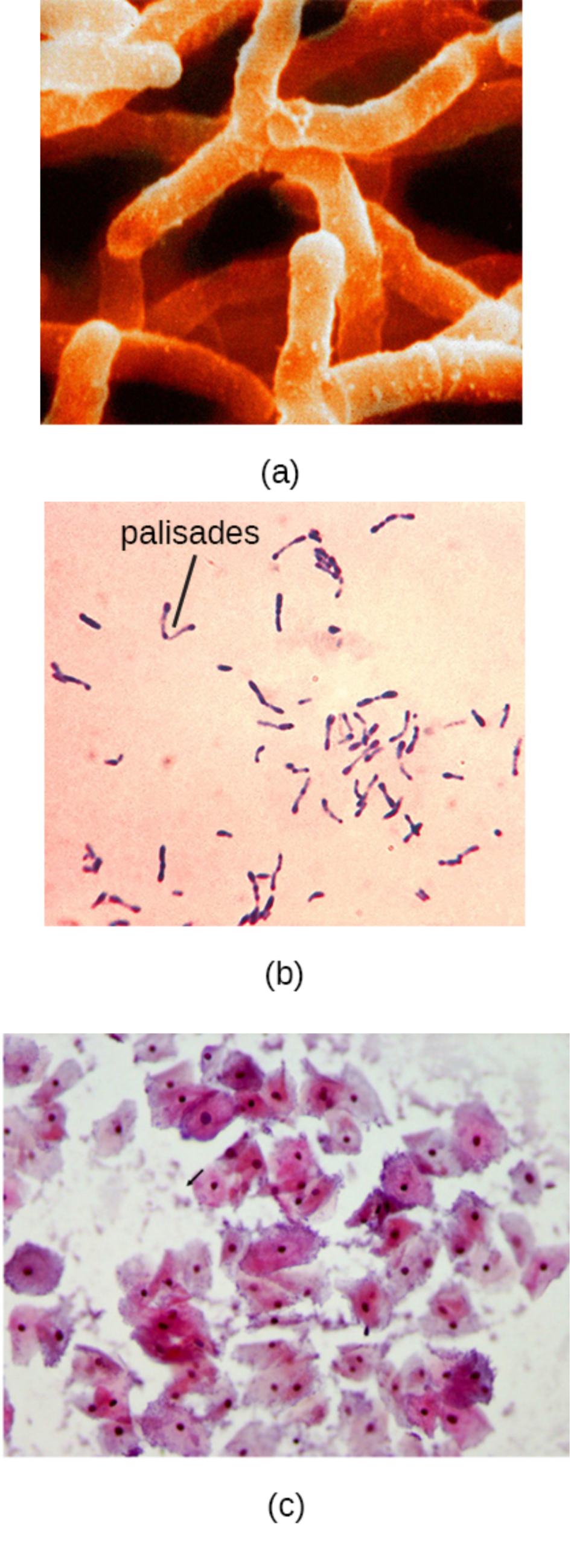
palisades: This term describes the characteristic arrangement of Corynebacterium diphtheriae cells, where the bacilli align side-by-side like a picket fence. This distinctive orientation is a key microscopic feature used by microbiologists to identify the pathogen in clinical samples.
(a): This micrograph illustrates Actinomyces israelii, a bacterium famous for its complex, filaments that often resemble fungal hyphae. This structure allows the organism to penetrate deep into soft tissues, leading to chronic inflammatory lesions.
(b): This panel displays Corynebacterium diphtheriae, the causative agent of a severe respiratory disease that was once a leading cause of childhood mortality. The cells are pleomorphic and often show irregular staining at their poles, known as metachromatic granules.
(c): This image presents a Pap smear showing the presence of Gardnerella vaginalis, a primary marker for bacterial vaginosis. The “clue cells” visible here are epithelial cells completely covered in bacteria, obscuring their normal cellular margins.
The Actinobacteria phylum represents a major taxonomic group of bacteria with a high percentage of guanine and cytosine bases in their DNA. These microorganisms are incredibly varied in their morphology, ranging from thin, branching filaments to irregular rods and coccobacilli. While many inhabit the human microbiome as harmless commensals, certain species can trigger severe opportunistic infections when the body’s natural barriers are compromised.
Clinicians and researchers categorize these bacteria based on their unique staining properties and microscopic arrangements. For instance, the presence of branched structures or specific cellular alignments like palisades can provide immediate diagnostic clues before genetic sequencing is completed. This diversity highlights the evolutionary success of the Actinobacteria in adapting to various human tissue environments.
Key features of High G+C Gram-positive bacteria include:
- Distinctive cellular shapes, including filamentous and pleomorphic forms.
- Specialized metabolic pathways that produce secondary metabolites like antibiotics.
- The ability to form complex biofilms, particularly in the case of Gardnerella vaginalis.
- Production of potent exotoxins in specific pathogenic strains like C. diphtheriae.
Actinomycosis: The Persistent Masquerader
Actinomyces israelii is the primary driver of actinomycosis, a chronic and often painful infection characterized by slow-growing abscesses. Because these bacteria are normal inhabitants of the mouth and gastrointestinal tract, the disease typically occurs after trauma, such as dental work or abdominal surgery, which introduces the bacteria into the deeper soft tissues. The hallmark of this infection is the formation of “sulfur granules”—yellowish clumps of bacterial filaments that drain from the infected site through sinus tracts. Treatment usually involves prolonged courses of penicillin to ensure the deep-seated infection is fully eradicated.
Diphtheria: A Toxic Respiratory Threat
The pathogen Corynebacterium diphtheriae is the cause of diphtheria, a disease that primarily affects the mucous membranes of the throat and nose. The bacteria release a powerful exotoxin that kills host cells, leading to the formation of a thick, grayish pseudomembrane that can obstruct the airway. Beyond local damage, the toxin can enter the bloodstream and cause systemic complications, including myocarditis and polyneuropathy. Fortunately, widespread vaccination with the DTaP vaccine has made this life-threatening condition rare in many parts of the world.
Bacterial Vaginosis and Gardnerella vaginalis
Unlike the other two pathogens, Gardnerella vaginalis is a gram-variable coccobacillus most famous for its role in bacterial vaginosis. This condition is not a traditional infection but rather a shift in the vaginal microbiome where protective Lactobacilli are replaced by a polymicrobial overgrowth. The diagnosis is often confirmed by identifying clue cells on a Pap smear or wet mount. While this imbalance is frequently asymptomatic, it can increase the risk of contracting sexually transmitted infections and cause complications during pregnancy, such as preterm birth.
The study of High G+C Gram-positive bacteria underscores the incredible complexity of the human-microbe relationship. From the structural intricacies of Actinomyces branching to the diagnostic utility of clue cells in Gardnerella infections, these microorganisms require a multi-disciplinary approach involving pathology, microbiology, and clinical medicine. Continued vigilance in monitoring and treating these conditions remains a cornerstone of infectious disease management and women’s health.


