
Explore the fundamental anatomy and critical functions of the urinary system, a complex network essential for maintaining bodily fluid balance and eliminating waste products. This article delves into the roles of the kidneys and urinary bladder in blood filtration and urine excretion, vital for overall health.
The Body’s Filtration and Waste Management System
The urinary system, also known as the renal system, is a collection of organs that plays a vital role in maintaining the body’s internal environment. Its primary functions include filtering waste products from the blood, regulating blood volume and pressure, and maintaining electrolyte and acid-base balance. Without a properly functioning urinary system, toxins would accumulate in the bloodstream, leading to severe health complications.
This intricate system is comprised of the kidneys, ureters, urinary bladder, and urethra, all working in concert to produce, store, and excrete urine. Understanding the anatomy and physiology of these components is crucial for comprehending how the body manages its fluid balance and disposes of metabolic wastes, safeguarding against various diseases.
The main functions of the urinary system are:
- Controlling water balance in the body.
- Removing wastes from the blood and excreting them.
These critical roles highlight the system’s importance in maintaining overall physiological homeostasis.
Key Components of the Urinary System
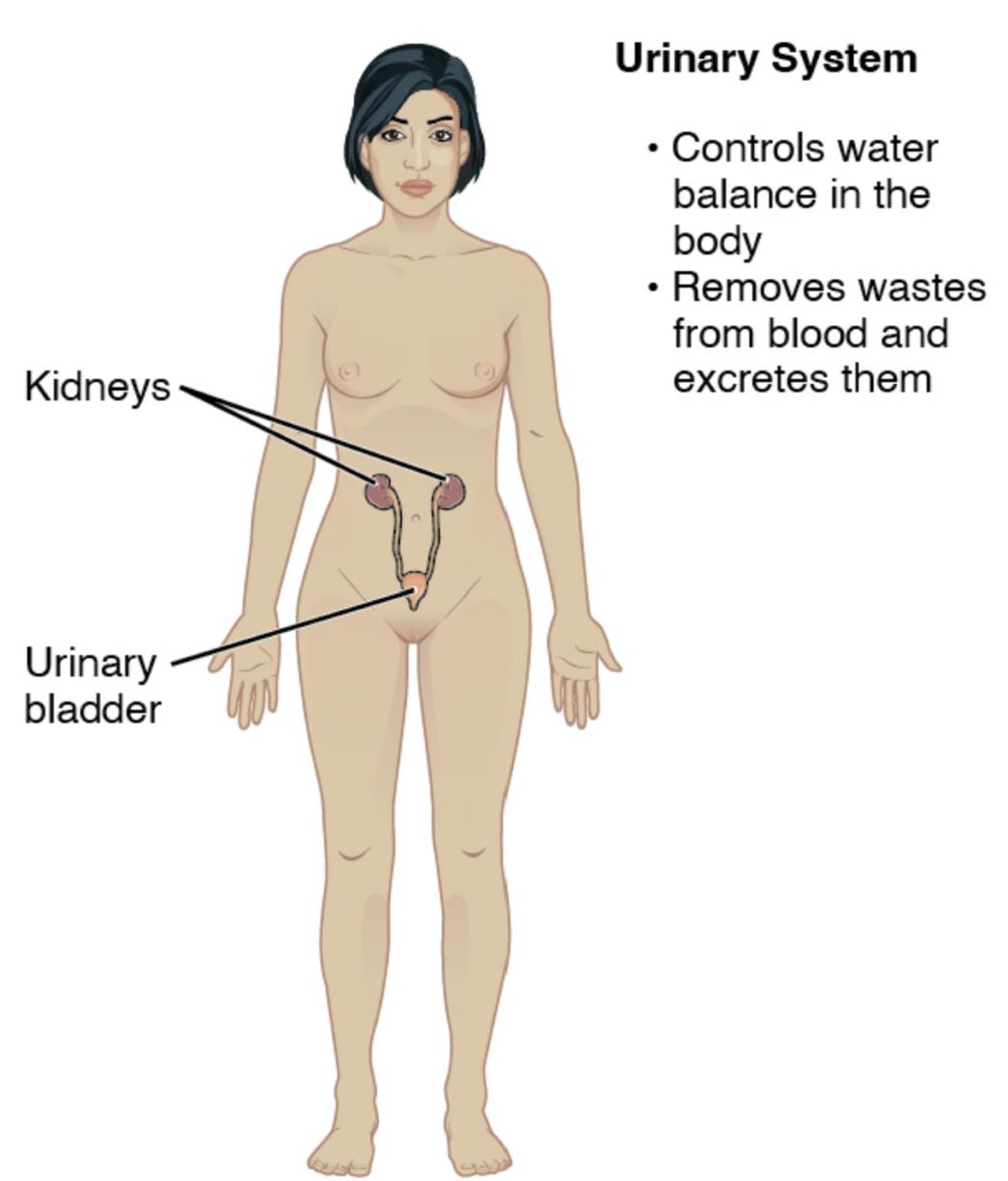
The image provides a simplified overview of the urinary system’s primary organs and their functions.
Urinary System: This refers to the organ system responsible for producing, storing, and eliminating urine. It plays a critical role in filtering blood, regulating fluid balance, and removing metabolic waste products.
Controls water balance in the body: This highlights a crucial homeostatic function of the urinary system, primarily managed by the kidneys. They regulate the amount of water reabsorbed into the bloodstream or excreted as urine, ensuring proper hydration and blood volume.
Removes wastes from blood and excretes them: This describes the excretory function of the urinary system. The kidneys filter metabolic wastes like urea, creatinine, and uric acid from the blood, which are then expelled from the body as part of urine.
Kidneys: These are a pair of bean-shaped organs located on either side of the spine, just below the rib cage. The kidneys are the main filtration units of the urinary system, responsible for processing about 1 liter of blood per minute to produce urine.
Urinary bladder: This is a hollow, muscular, elastic organ that stores urine before it is expelled from the body. It can typically hold about 300-500 milliliters of urine in adults, expanding as it fills and contracting during urination.
The Kidneys: Master Regulators of Blood and Fluid
The kidneys are arguably the most vital organs of the urinary system, performing a myriad of essential functions beyond simple waste removal. Each kidney contains over a million tiny filtering units called nephrons, which are responsible for the complex processes of filtration, reabsorption, and secretion that ultimately form urine.
Filtration and Waste Removal
The kidneys tirelessly filter approximately 180 liters of blood plasma daily, removing metabolic waste products such as urea (from protein metabolism), creatinine (from muscle metabolism), and uric acid (from nucleic acid metabolism). These wastes are dissolved in water and electrolytes to form urine. If the kidneys fail to remove these wastes effectively, they can accumulate in the bloodstream, leading to a life-threatening condition called uremia or kidney failure. Conditions like chronic kidney disease (CKD) progressively diminish kidney function, potentially requiring dialysis or kidney transplantation.
Water Balance and Blood Pressure Regulation
Beyond waste filtration, the kidneys are paramount in controlling water balance in the body. They regulate how much water is excreted in urine versus how much is reabsorbed back into the bloodstream, ensuring that body fluid levels remain within a narrow, healthy range. This function is closely tied to blood pressure regulation. By adjusting blood volume, the kidneys directly influence blood pressure; for example, if blood volume drops, the kidneys can reduce water excretion to help restore it, thereby increasing blood pressure. This is partly achieved through the renin-angiotensin-aldosterone system, a complex hormonal pathway that influences sodium and water reabsorption.
The Urinary Bladder: Storage and Excretion
Once urine is formed in the kidneys, it travels down two thin tubes called ureters to the urinary bladder. The urinary bladder serves as a temporary reservoir for urine. Its muscular walls, primarily composed of detrusor muscle, allow it to expand significantly as it fills and contract forcefully during urination.
When the bladder becomes sufficiently full, stretch receptors in its walls send signals to the brain, creating the sensation of needing to urinate. This triggers the micturition reflex, which, under voluntary control in adults, leads to the relaxation of sphincter muscles and the contraction of the detrusor muscle, expelling urine from the body through the urethra. Disorders affecting the bladder, such as urinary tract infections (UTIs), interstitial cystitis, or bladder control issues (incontinence), can significantly impact an individual’s quality of life.
Conclusion
The urinary system is an indispensable biological network, meticulously designed to maintain the body’s delicate internal balance. From the kidneys’ continuous filtration of blood and precise regulation of fluid and electrolyte levels to the bladder’s role in temporary storage and controlled excretion, each component performs vital functions. A healthy urinary system is fundamental for overall well-being, safeguarding against the accumulation of toxins and ensuring optimal physiological function. Understanding its anatomy and intricate processes provides profound insight into the body’s remarkable capacity for self-regulation and waste management.


