
Understanding the intricate process of digestion and absorption is fundamental to appreciating how our bodies derive nutrients from the food we consume. This comprehensive diagram illustrates the remarkable journey food takes through the alimentary canal, highlighting the distinct mechanical and chemical processes that occur in each organ. From the initial bite to the final stages of waste elimination, every part of the digestive system plays a critical role in transforming complex food into absorbable molecules, ensuring our sustained health and energy.
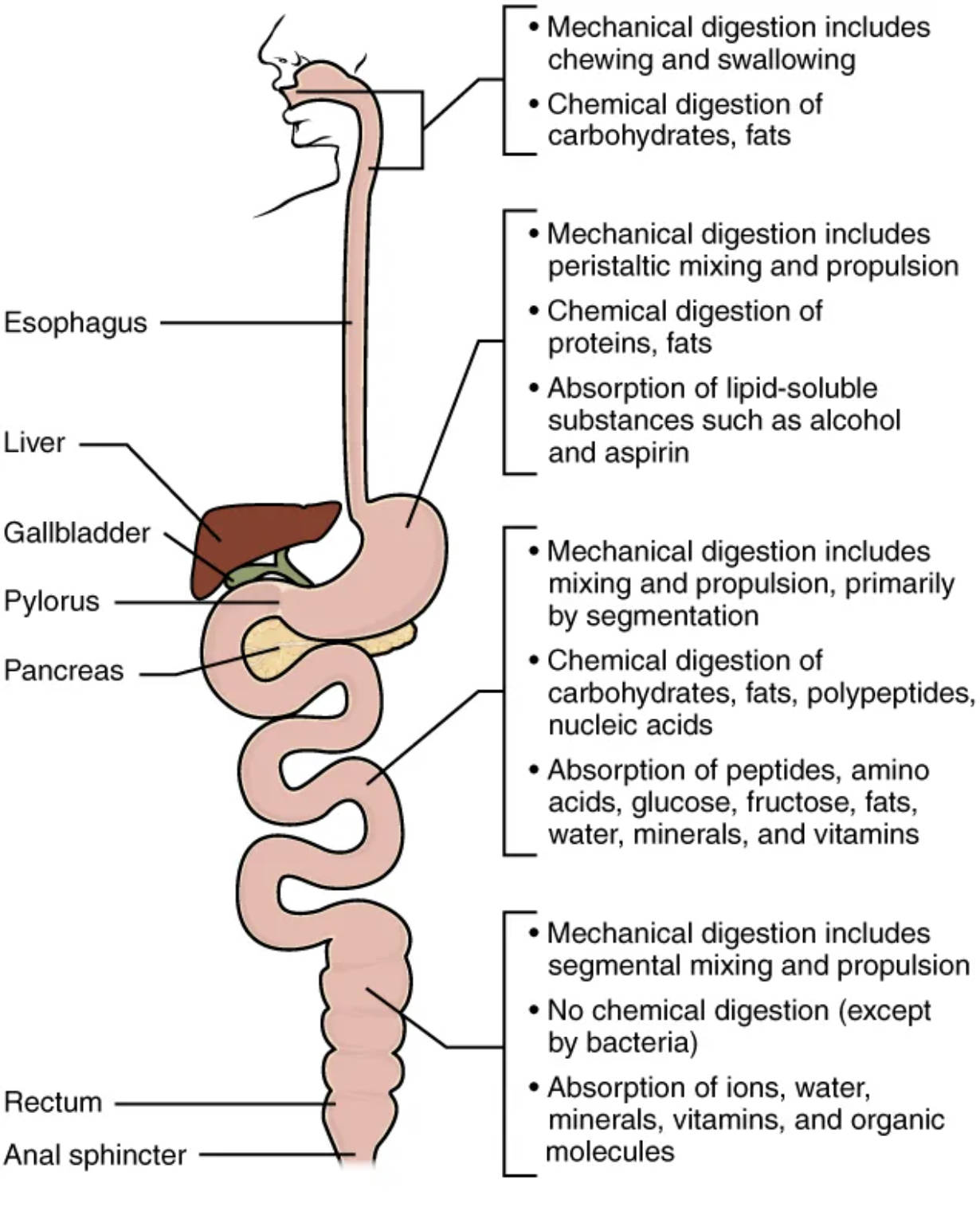
Esophagus: This muscular tube connects the pharynx (throat) to the stomach, acting as a passageway for swallowed food. It propels food downwards through rhythmic contractions known as peristalsis, a key component of mechanical digestion.
Liver: A large, vital organ located in the upper right abdomen, the liver plays numerous roles in digestion, including producing bile. Bile is essential for the emulsification of fats in the small intestine, aiding their breakdown and absorption.
Gallbladder: A small, pear-shaped organ nestled under the liver, the gallbladder’s primary function is to store and concentrate bile. It releases this concentrated bile into the small intestine when fats are present, facilitating their digestion.
Pylorus: This is the narrow, distal part of the stomach that connects to the small intestine (duodenum). The pyloric sphincter, a muscular valve within the pylorus, controls the release of partially digested food (chyme) from the stomach into the small intestine.
Pancreas: Situated behind the stomach, the pancreas is a dual-function gland, secreting both digestive enzymes and hormones. Its exocrine function involves producing pancreatic juice containing enzymes crucial for digesting carbohydrates, proteins, and fats in the small intestine.
Rectum: The final section of the large intestine, the rectum stores feces before elimination. It extends from the sigmoid colon to the anal canal, signaling the body when it’s time for defecation.
Anal sphincter: These are rings of muscle (internal involuntary and external voluntary) that control the release of feces from the body. They maintain continence and relax during defecation to allow the passage of waste.
The process of digestion is a remarkable physiological feat, beginning the moment food enters the mouth and concluding with the absorption of nutrients and elimination of waste. It involves a series of coordinated mechanical and chemical actions that break down complex macromolecules into simpler forms suitable for assimilation into the bloodstream. This intricate journey ensures that the body receives the necessary energy, vitamins, minerals, and building blocks for growth, repair, and overall function.
The digestive tract, also known as the alimentary canal, is a muscular tube extending from the mouth to the anus, along with several accessory organs like the liver, gallbladder, and pancreas. Each segment of this pathway is specialized to perform specific tasks:
- Mouth and Pharynx: Initial mechanical digestion (chewing) and some chemical digestion (carbohydrates and fats via salivary enzymes). Swallowing propels food into the esophagus.
- Esophagus: Primarily mechanical digestion through peristaltic waves, moving food towards the stomach.
- Stomach: Vigorous mechanical mixing and propulsion, coupled with significant chemical digestion of proteins and some fats. Limited absorption of lipid-soluble substances like alcohol and aspirin occurs here.
- Small Intestine: The primary site for extensive chemical digestion of carbohydrates, fats, polypeptides, and nucleic acids. It is also where the vast majority of nutrient absorption takes place, including amino acids, glucose, fructose, fats, water, minerals, and vitamins.
- Large Intestine: Predominantly mechanical digestion via segmental mixing. No significant chemical digestion occurs here, except that performed by resident bacteria. Its main role is the absorption of ions, water, minerals, vitamins, and certain organic molecules, forming feces.
Understanding these stages is crucial for appreciating how the body efficiently extracts vital nutrients. For instance, the stomach’s highly acidic environment is essential for denaturing proteins and activating enzymes like pepsin, while the small intestine’s enormous surface area, thanks to villi and microvilli, is perfectly adapted for maximal absorption. The coordinated action of enzymes from the pancreas and bile from the liver and gallbladder further optimizes the breakdown of all major macronutrients.
The digestive system is a prime example of physiological specialization, with each organ contributing uniquely to the overall process. From the initial breakdown in the mouth to the final absorption in the small and large intestines, a seamless progression ensures that the body’s energy and nutritional demands are met. When this complex system functions optimally, it promotes overall health and vitality. Conversely, disruptions in any part of this pathway can lead to a range of digestive disorders and health complications.
In conclusion, the digestive and absorption process is a meticulously orchestrated biological symphony, transforming ingested food into the essential components that fuel our existence. The coordinated efforts of mechanical breakdown, enzymatic action, and selective absorption across various specialized organs demonstrate the body’s remarkable efficiency. Appreciating this intricate journey from mouth to anus provides fundamental insight into human physiology and the importance of maintaining a healthy digestive system for overall well-being.


