
Carbohydrates are a primary source of energy for the human body, but they cannot be directly utilized in their complex forms. This detailed flow chart illustrates the intricate, multi-step process of carbohydrate digestion, breaking down complex polysaccharides into their absorbable monosaccharide units. Understanding this biochemical pathway is crucial for appreciating how our bodies extract vital energy from foods like starches and sugars, highlighting the roles of specific enzymes at each stage of this essential metabolic conversion.
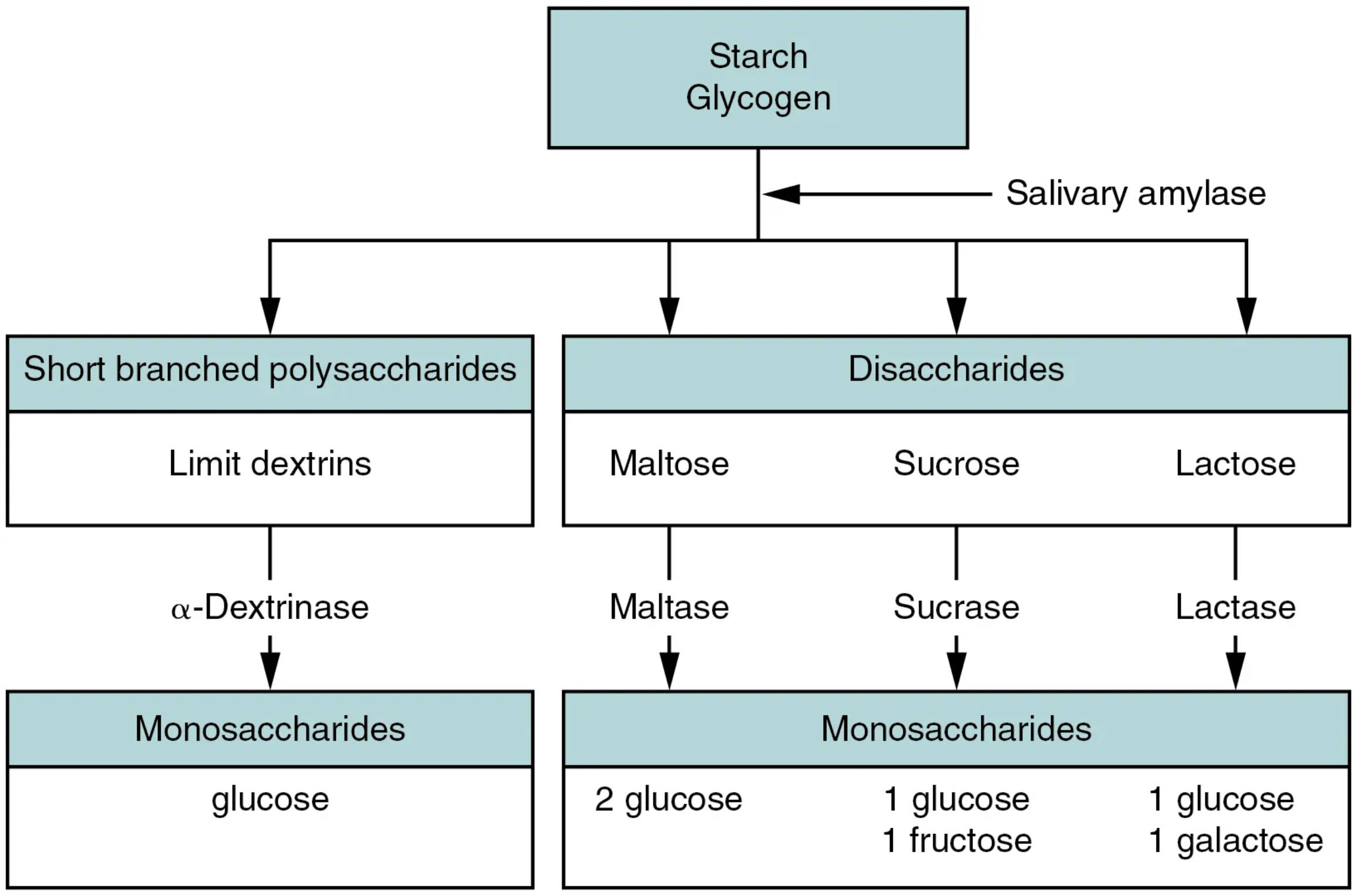
Starch: A complex carbohydrate (polysaccharide) composed of many glucose units linked together, primarily found in plants like grains, potatoes, and legumes. It serves as a major dietary energy source for humans.
Glycogen: A highly branched polysaccharide of glucose that serves as the primary form of glucose storage in animals and fungi, mainly in the liver and muscles. It is readily broken down to glucose when energy is needed.
Salivary amylase: An enzyme produced in the salivary glands and secreted into the mouth, initiating the chemical digestion of carbohydrates. It breaks down large starch and glycogen molecules into smaller polysaccharides and disaccharides.
Short branched polysaccharides: Intermediate products formed during the initial breakdown of starch and glycogen by amylase. These are still relatively large carbohydrate molecules, though smaller than the original polysaccharides.
Limit dextrins: A type of short branched polysaccharide that results from the incomplete hydrolysis of starch and glycogen by amylase. Their branched structure makes them resistant to further breakdown by amylase.
Disaccharides: Sugars composed of two monosaccharide units linked together, such as maltose, sucrose, and lactose. These must be further broken down before absorption.
Maltose: A disaccharide composed of two glucose units, typically formed during the digestion of starch. It is a common intermediate in carbohydrate breakdown.
Sucrose: A disaccharide composed of one glucose unit and one fructose unit, commonly known as table sugar. It is found naturally in fruits and many processed foods.
Lactose: A disaccharide composed of one glucose unit and one galactose unit, found primarily in milk and dairy products. Its digestion requires the enzyme lactase.
αα-Dextrinase: An enzyme primarily found in the small intestine, responsible for breaking down limit dextrins. It hydrolyzes the alpha-1,6 glycosidic bonds in these branched polysaccharides, yielding glucose.Maltase: An enzyme located in the brush border of the small intestine, responsible for hydrolyzing maltose into two glucose units. This is a crucial step for glucose absorption.
Sucrase: An enzyme found in the brush border of the small intestine that breaks down sucrose into one glucose unit and one fructose unit. Both monosaccharides are then absorbed.
Lactase: An enzyme present in the brush border of the small intestine that hydrolyzes lactose into one glucose unit and one galactose unit. Its deficiency leads to lactose intolerance.
Monosaccharides: The simplest form of carbohydrates, consisting of a single sugar unit, which are the only forms that can be absorbed directly into the bloodstream. Examples include glucose, fructose, and galactose.
Glucose: A six-carbon monosaccharide that is the most important carbohydrate in biology, serving as the primary source of energy for cells. It is the end product of starch and glycogen digestion.
Fructose: A five-carbon monosaccharide, often called fruit sugar, found naturally in fruits, honey, and root vegetables. It is absorbed in the small intestine and metabolized in the liver.
Galactose: A six-carbon monosaccharide that is a component of the disaccharide lactose. It is absorbed in the small intestine and converted to glucose in the liver.
Carbohydrates are fundamental to human metabolism, serving as the body’s most immediate and accessible source of energy. However, the complex carbohydrates we consume, such as starch and glycogen, are too large to be directly absorbed into the bloodstream. Therefore, a sophisticated enzymatic process is required to break them down into their simplest forms: monosaccharides. This process, known as carbohydrate digestion, begins in the mouth and is completed in the small intestine, involving a series of hydrolytic reactions facilitated by specific enzymes at each stage. Understanding this biochemical cascade is paramount to comprehending nutrient assimilation and energy production within the body.
The journey of carbohydrate digestion commences the moment food enters the mouth. Salivary amylase, an enzyme secreted in saliva, initiates the breakdown of large polysaccharide molecules like starch and glycogen into smaller short branched polysaccharides and disaccharides. This initial phase is relatively brief, as food quickly passes into the stomach where the acidic environment inactivates salivary amylase. The bulk of carbohydrate digestion then resumes in the small intestine, where pancreatic amylase continues to break down the remaining polysaccharides into disaccharides such as maltose, sucrose, and lactose, as well as limit dextrins.
The final and most critical stage of carbohydrate digestion occurs at the brush border of the small intestine. Here, a battery of specific disaccharidases and other enzymes complete the hydrolysis of disaccharides and limit dextrins into their constituent monosaccharides. These enzymes include:
-
αα-Dextrinase: Acts on limit dextrins to yield glucose. -
Maltase: Breaks down maltose into two glucose molecules.
-
Sucrase: Hydrolyzes sucrose into one glucose and one fructose molecule.
-
Lactase: Splits lactose into one glucose and one galactose molecule.
Once these monosaccharides (glucose, fructose, and galactose) are formed, they are then transported across the intestinal epithelial cells and into the bloodstream, where they can be distributed to cells throughout the body for energy production or storage.
A common condition related to carbohydrate digestion is lactose intolerance, which arises from a deficiency in the enzyme lactase. Without sufficient lactase, lactose (milk sugar) cannot be broken down into glucose and galactose in the small intestine. Instead, it passes undigested into the large intestine, where it is fermented by gut bacteria. This fermentation process produces gas, leading to symptoms such as bloating, abdominal pain, flatulence, and diarrhea. While it is not a life-threatening condition, it can significantly impact an individual’s diet and quality of life, often managed by avoiding lactose-containing products or using lactase enzyme supplements.
In conclusion, the meticulous breakdown of carbohydrates from complex polysaccharides to simple monosaccharides is a cornerstone of human metabolism. This enzymatic cascade, starting with salivary amylase and culminating with brush border enzymes in the small intestine, ensures that the body can efficiently extract and absorb vital energy sources. A thorough understanding of this process is not only crucial for grasping fundamental biochemistry but also for comprehending dietary recommendations and common digestive disorders like lactose intolerance.


