
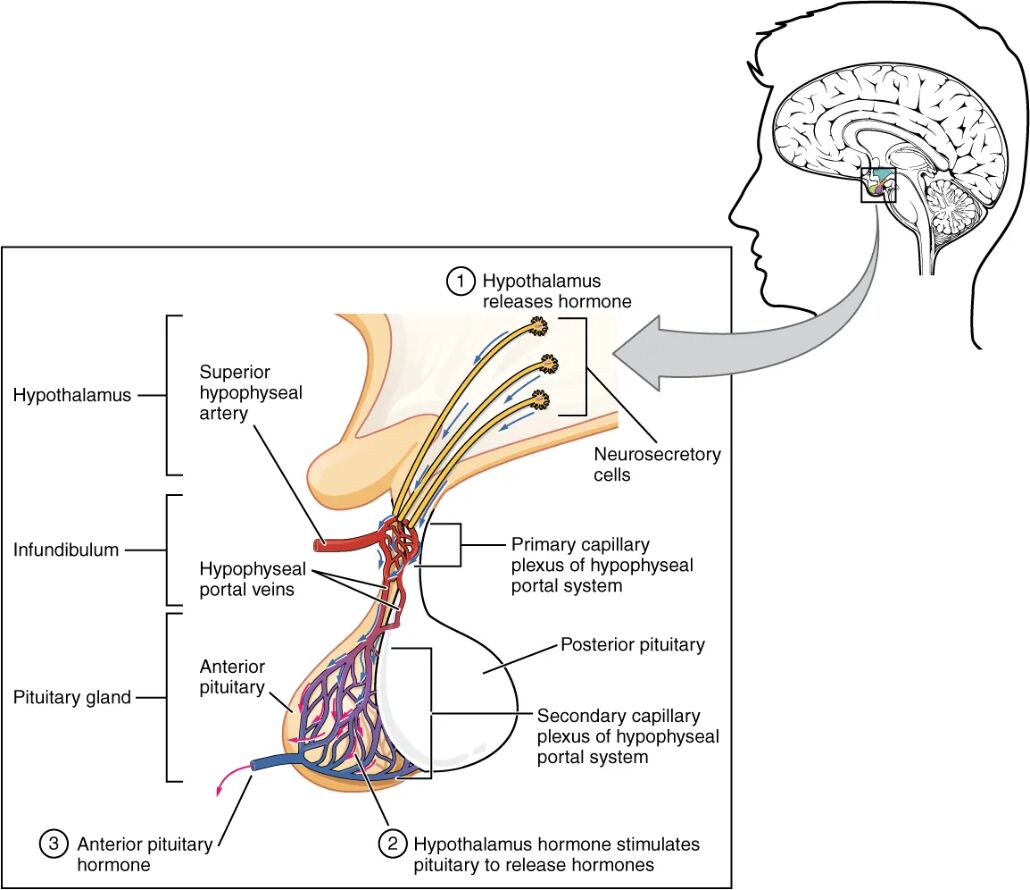
The anterior pituitary is a vital component of the endocrine system, responsible for producing and releasing hormones that regulate numerous bodily functions. This diagram illustrates the intricate relationship between the hypothalamus and the anterior pituitary, showcasing the hypophyseal portal system that facilitates hormonal communication. Understanding this structure provides a deeper appreciation of how the body maintains hormonal balance and supports overall health.
Labels Introduction
- Hypothalamus The hypothalamus serves as the control center, producing hormones that regulate the anterior pituitary. It releases these hormones into the hypophyseal portal system to influence pituitary function.
- Superior hypophyseal artery This artery supplies blood to the hypothalamus and the upper part of the pituitary gland. It plays a crucial role in delivering nutrients and oxygen to support hormone production.
- Infundibulum The infundibulum acts as a stalk connecting the hypothalamus to the pituitary gland. It facilitates the transport of hormones and neural signals between these structures.
- Hypophyseal portal veins These veins form the hypophyseal portal system, carrying hypothalamic hormones to the anterior pituitary. They ensure efficient delivery of regulatory signals to stimulate hormone release.
- Pituitary gland The pituitary gland, often called the master gland, consists of anterior and posterior lobes with distinct functions. The anterior lobe produces and secretes its own hormones under hypothalamic influence.
- Anterior pituitary The anterior pituitary manufactures seven key hormones, including growth hormone (GH) and prolactin. It responds to hypothalamic signals to release these hormones into the bloodstream.
- Posterior pituitary The posterior pituitary stores and releases hormones like oxytocin and antidiuretic hormone produced by the hypothalamus. It differs from the anterior pituitary by not synthesizing its own hormones.
- Primary capillary plexus of hypophyseal portal system This network of capillaries in the hypothalamus collects hypothalamic hormones. It marks the starting point of the hypophyseal portal system for hormone transport.
- Secondary capillary plexus of hypophyseal portal system Located in the anterior pituitary, this plexus delivers hypothalamic hormones to stimulate hormone production. It ensures targeted regulation of anterior pituitary activity.
- Neurosecretory cells These specialized cells in the hypothalamus produce releasing and inhibiting hormones. They release these hormones into the primary capillary plexus to regulate the anterior pituitary.
- Hypothalamus releases hormone This process involves the secretion of regulatory hormones by the hypothalamus. These hormones travel through the portal system to control anterior pituitary function.
- Hypothalamus hormone stimulates pituitary to release hormones This step highlights the stimulatory effect of hypothalamic hormones on the anterior pituitary. It triggers the release of hormones like thyroid-stimulating hormone (TSH) and adrenocorticotropic hormone (ACTH).
Anatomical Overview of the Anterior Pituitary
The anterior pituitary’s structure is a marvel of endocrine coordination, working closely with the hypothalamus. This section explores its anatomy and key features.
- The anterior pituitary is distinct from the posterior pituitary, relying on the hypophyseal portal system for hormonal regulation.
- The infundibulum provides a physical link, while the superior hypophyseal artery ensures adequate blood supply.
- The primary and secondary capillary plexuses facilitate the two-step transport of hypothalamic hormones.
- This system allows precise control over the release of hormones that influence growth, metabolism, and reproduction.
Physiological Role of Hormones in the Anterior Pituitary
The hormones produced by the anterior pituitary have far-reaching effects on the body’s physiology. This part delves into their functions and significance.
- The anterior pituitary releases growth hormone (GH), which promotes tissue growth and metabolism.
- Thyroid-stimulating hormone (TSH) stimulates the thyroid gland to produce T3 and T4, regulating metabolic rate.
- Adrenocorticotropic hormone (ACTH) triggers the adrenal glands to release cortisol, aiding stress response.
- Prolactin supports lactation, while follicle-stimulating hormone (FSH) and luteinizing hormone (LH) regulate reproductive functions.
Hypothalamic-Pituitary Axis and the Hypophyseal Portal System
The connection between the hypothalamus and anterior pituitary is a critical regulatory pathway. This section examines this relationship in detail.
- The hypothalamus produces releasing hormones like thyrotropin-releasing hormone (TRH) and corticotropin-releasing hormone (CRH).
- These hormones travel through the hypophyseal portal veins to the anterior pituitary.
- The secondary capillary plexus ensures these hormones reach target cells, stimulating hormone production.
- This axis is essential for maintaining homeostasis and responding to physiological demands.
Clinical Relevance and Hormonal Imbalances
Understanding the anterior pituitary’s role can highlight potential health issues related to hormonal regulation. This section provides insight into its clinical importance.
- Overproduction of GH can lead to acromegaly, causing enlarged hands, feet, and facial features.
- Insufficient TSH release may result in hypothyroidism, marked by fatigue and weight gain.
- Dysfunction in ACTH production can cause Addison’s disease, characterized by low cortisol levels.
- Regular assessment of pituitary function is vital for diagnosing and treating these conditions.
The anterior pituitary’s collaboration with the hypothalamus exemplifies the body’s sophisticated endocrine network. Through the hypophyseal portal system, it ensures the precise release of hormones that govern growth, metabolism, and reproduction. This anatomical and physiological insight lays a strong foundation for further exploration of endocrine health.


