
Endocytosis is a vital form of active transport by which a cell captures external substances within a portion of its plasma membrane. This process allows the cell to ingest nutrients, neutralize pathogens, and receive complex hormonal signals, ensuring physiological stability across various tissue types. By transforming the membrane into specialized transport containers, cells can bypass the limitations of simple diffusion to manage larger molecules and volumes of fluid.
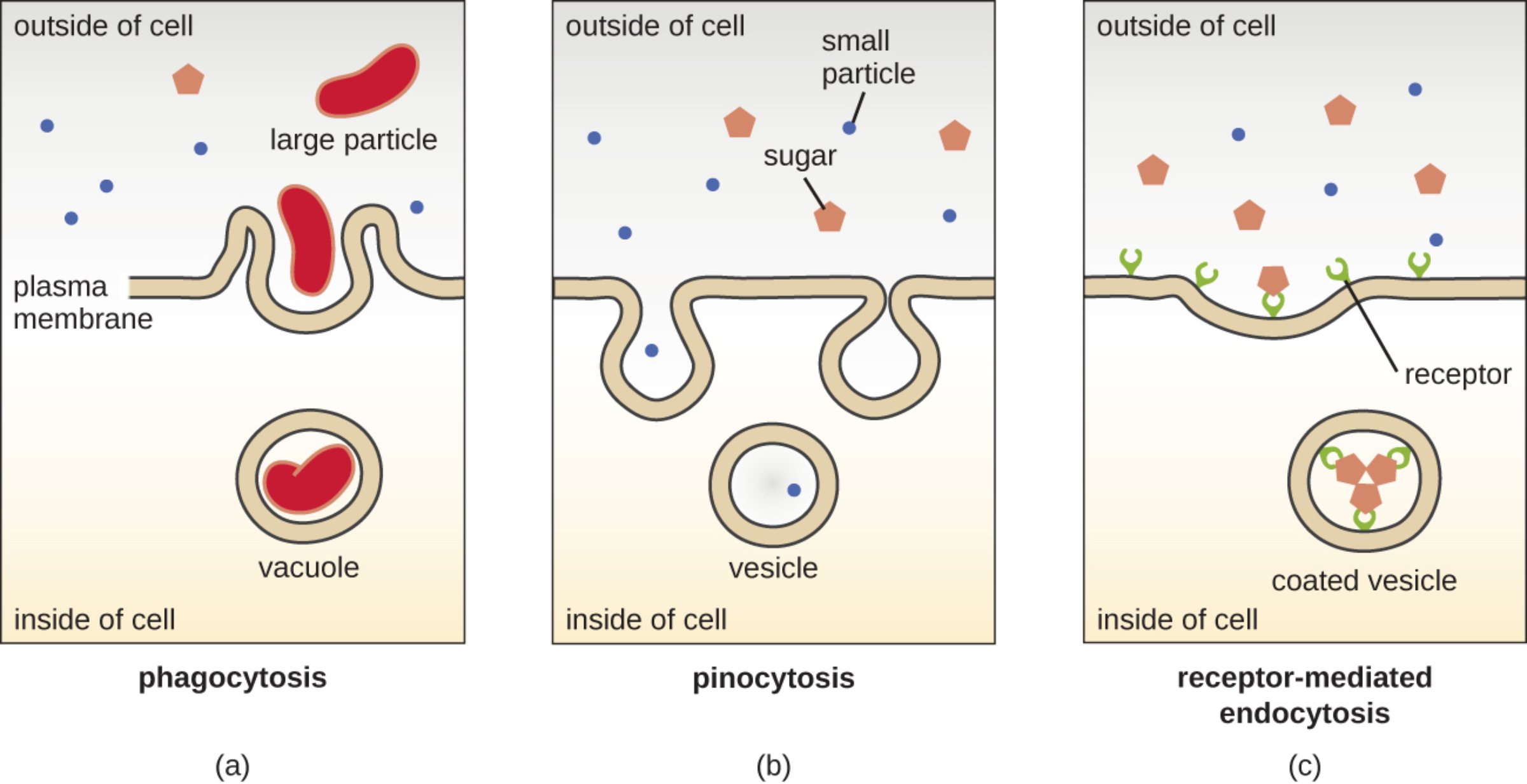
outside of cell: This refers to the extracellular environment, where various molecules, ions, and particles reside before being internalized. It serves as a reservoir for nutrients and a communication pathway for signaling molecules like hormones that interact with the cell surface.
inside of cell: Also known as the cytoplasm, this internal space is where the cell processes internalized materials for energy or structural use. It maintains a strictly regulated chemical environment necessary for enzymatic reactions and the proper functioning of organelles.
large particle: These are substantial solids, such as bacteria or dead cell remnants, targeted for ingestion during the process of phagocytosis. Once taken in, they are typically broken down by digestive enzymes within the cell to recycle raw materials or eliminate threats.
plasma membrane: This is the dynamic lipid bilayer that serves as the selective barrier for the cell, separating the intracellular contents from the environment. During endocytosis, it invaginates or folds inward to engulf materials and pinch off into internal sacs called vesicles or vacuoles.
vacuole: In the context of phagocytosis, this large membrane-bound sac is formed once the plasma membrane successfully surrounds a solid particle. It eventually fuses with a lysosome to facilitate the enzymatic digestion of its contents in a safe, enclosed space.
small particle: These represent dissolved solutes or tiny molecules present in the extracellular fluid that are taken in non-specifically. They are internalized as part of the fluid sampling process that allows the cell to monitor its surroundings.
sugar: These organic molecules, such as glucose, are vital nutrients often found in the extracellular fluid of living organisms. They may be internalized through various endocytic pathways to provide the chemical energy necessary for cellular respiration and growth.
vesicle: A vesicle is a small, membrane-bound compartment that transports liquid and dissolved solutes into the cell interior during pinocytosis. It is significantly smaller than a vacuole and moves materials through the cytoplasm to specific intracellular destinations.
receptor: These are specialized transmembrane proteins that exhibit high affinity for specific ligands, such as cholesterol or certain vitamins, in the extracellular space. They allow the cell to target and capture specific substances with high precision, even when those substances are present in very low concentrations.
coated vesicle: This is a specialized vesicle formed during receptor-mediated endocytosis, typically stabilized by a protein layer such as clathrin. This protein coat facilitates the budding of the membrane and ensures the precise delivery of the internalized cargo to the correct metabolic pathway.
Mechanisms of Cellular Ingestion
Endocytosis is the general term for a group of processes that allow cells to bring in materials from their environment by wrapping them in a section of the plasma membrane. This is an essential physiological function that requires energy in the form of adenosine triphosphate (ATP). Because the plasma membrane is semi-permeable, it cannot allow large proteins or entire organisms to pass through directly; therefore, endocytosis provides a structural workaround to move bulky cargo safely into the cell.
In the human body, different types of cells specialize in different endocytic pathways depending on their metabolic or immune needs. For example, specialized white blood cells known as macrophages use phagocytosis to clear out invading pathogens, while the cells lining the intestines might utilize pinocytosis to absorb nutrients from a liquid medium. This versatility ensures that the body can respond to a wide range of biological requirements at the cellular level.
The three primary variations of endocytosis include:
- Phagocytosis: The ingestion of solid particles, often referred to as “cell eating.”
- Pinocytosis: The uptake of extracellular fluid and solutes, often called “cell drinking.”
- Receptor-Mediated Endocytosis: A highly specific process that targets particular molecules through receptor binding.
Physiological Significance and Cellular Homeostasis
The anatomical structure of the plasma membrane is key to these processes. By utilizing the fluidity of the phospholipid bilayer, the cell can create deep pockets that eventually pinch off into the cytoplasm. Once a vesicle or vacuole is inside the cell, it is often directed toward lysosomes, which contain hydrolytic enzymes designed to break down the cargo into its basic building blocks, such as amino acids or simple sugars.
Receptor-mediated endocytosis is particularly crucial for human health, as it is the primary mechanism for the uptake of low-density lipoprotein (LDL) cholesterol. If the receptors for LDL are defective or missing, cholesterol remains in the bloodstream, potentially leading to cardiovascular diseases. This process is a classic example of how cellular anatomy and molecular signaling work in tandem to maintain systemic balance. By specifically selecting the molecules it needs, the cell conserves energy and avoids the clutter of non-essential materials.
Furthermore, these pathways are integral to the regulation of cell surface receptors themselves. Through a process called down-regulation, a cell can internalize its own receptors to decrease its sensitivity to a particular hormone, such as insulin. This highlights how endocytosis is not just about nutrition or defense, but also serves as a sophisticated volume control for the cell’s communication systems. Understanding these mechanisms provides deeper insight into how metabolic disorders and immune deficiencies develop at the microscopic level.
The intricate coordination required for endocytosis demonstrates the complexity of cellular life and its reliance on structural integrity. Every invagination of the membrane and every binding of a ligand to a receptor is a programmed step toward maintaining the health and functionality of the organism. From the protective actions of the immune system to the precise absorption of vital nutrients, these endocytic pathways remain the cornerstone of cellular survival and human physiology.


