
The biological world is filled with an incredible array of organisms that display unique evolutionary adaptations, and among the most visually striking are the marine flatworms belonging to the Class Turbellaria. These organisms represent a fascinating branch of the Phylum Platyhelminthes, characterized by their free-living lifestyle and relatively complex physiological structures compared to their parasitic cousins. One of the most renowned species within this group is the Bedford’s flatworm, scientifically known as Pseudobiceros bedfordi. Found primarily in the warm, tropical waters of the Indo-Pacific, this flatworm is a master of mimicry and movement, showcasing a vibrant pattern of colors that serves both as a warning to predators and a testament to the diversity of marine life. Understanding the biological and medical significance of these organisms requires a deep dive into their anatomy, reproductive strategies, and ecological roles, providing a window into the early evolution of bilateral symmetry and cephalization in the animal kingdom.
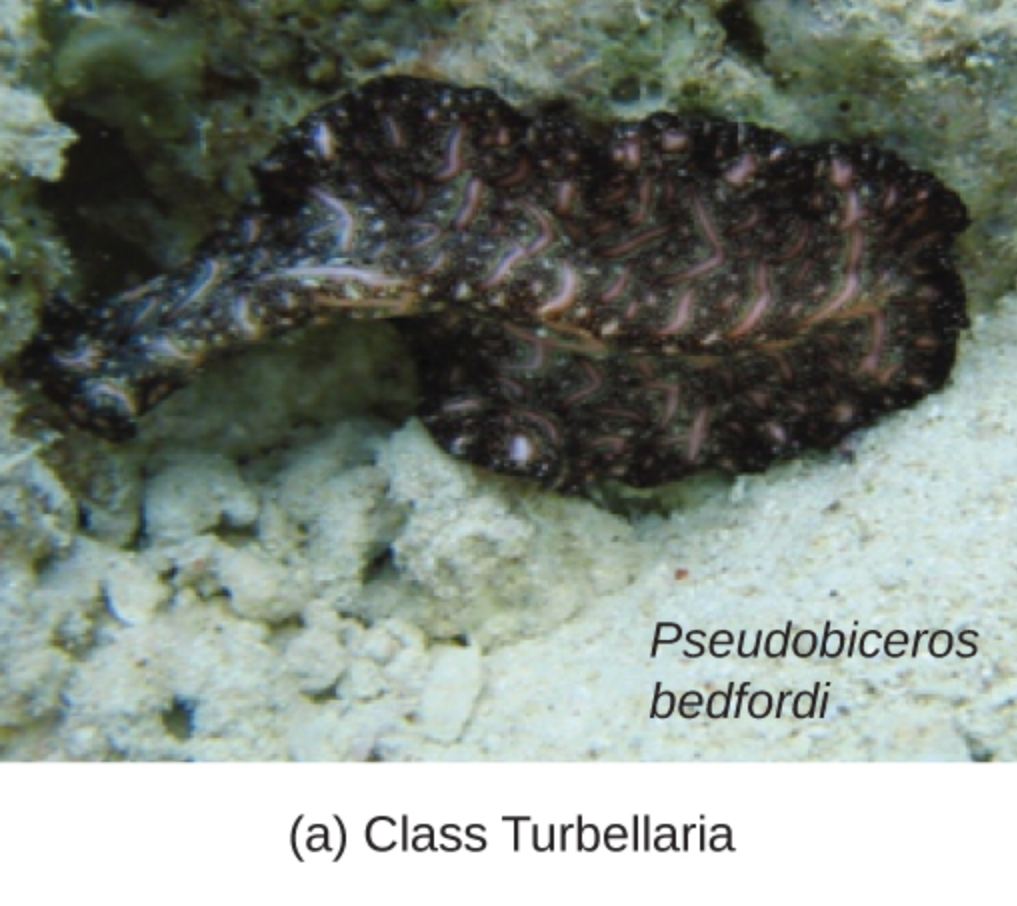
Pseudobiceros bedfordi: This label identifies the specific species shown, which is a member of the polyclad order of flatworms known for its intricate and colorful dorsal patterns. These patterns are often used in aposematism, signaling to potential predators that the organism may contain toxins or be unpalatable.
Class Turbellaria: This anatomical classification denotes a group within the Phylum Platyhelminthes that consists almost entirely of free-living, non-parasitic flatworms. They are distinguished by the presence of a ciliated epidermis and a sophisticated range of sensory organs that allow them to navigate aquatic environments effectively.
Classification and Taxonomic Overview
The classification of flatworms is a critical aspect of invertebrate zoology. The Phylum Platyhelminthes is divided into several classes, with Turbellaria being the most primitive and ecologically diverse group. Unlike the Trematoda (flukes) or Cestoda (tapeworms), turbellarians are generally not parasitic. They represent the baseline for bilateral organisms, possessing a distinct head and tail end, which allows for directed movement and specialized sensory perception. Within this class, the order Polycladida contains the large, colorful marine flatworms like the Pseudobiceros bedfordi. These marine polyclads are often mistaken for sea slugs (nudibranchs) due to their brilliant colors, but they are fundamentally different in their internal anatomy and developmental biology.
The taxonomy of these organisms is often revised as molecular biology provides new insights into their genetic heritage. Historically, morphological traits like the branching of the gut and the structure of the reproductive organs were the primary markers for classification. Today, researchers utilize genomic sequencing to better understand how species like the Bedford’s flatworm evolved within the complex reef ecosystems they inhabit. Their position in the phylogenetic tree offers vital clues about the origins of complex organ systems in more advanced multicellular animals.
Morphology and Internal Anatomy
The physical structure of a turbellarian flatworm is defined by its flattened, leaf-like body. This dorsoventral flattening is not merely aesthetic; it is a vital functional adaptation. Because flatworms lack a dedicated circulatory or respiratory system, every cell must be close enough to the surface to exchange oxygen and carbon dioxide via simple diffusion. The Pseudobiceros bedfordi typically reaches a length of 8 to 10 cm, making it a relatively large specimen within its class. Its body consists of three germ layers—ectoderm, mesoderm, and endoderm—making it a triploblastic organism, though it lacks a true body cavity, or coelom, categorizing it as an acoelomate.
- Epidermis and Cilia: The ventral surface of the flatworm is covered in microscopic hair-like structures called cilia. These cilia, combined with muscular contractions and the secretion of mucus, allow the worm to glide effortlessly over the seabed or coral reefs.
- Parenchyma: Since there is no body cavity, the space between the body wall and the internal organs is filled with a solid tissue called parenchyma. This tissue provides structural support and serves as a site for nutrient storage and cellular transport.
- Gastrovascular Cavity: The digestive system of a polyclad flatworm is highly branched. This branching allows nutrients to be distributed throughout the entire body without the need for a heart or blood vessels. The system is “incomplete,” meaning it has only one opening—the mouth—which serves as both the entry for food and the exit for waste.
Locomotion and Behavioral Ecology
Movement in the Class Turbellaria is a combination of primitive ciliary gliding and more advanced muscular undulation. Smaller turbellarians rely almost exclusively on their ventral cilia to move through the water film or across substrates. However, larger species like the Bedford’s flatworm have developed complex muscle layers—circular, longitudinal, and diagonal—that allow them to swim. When swimming, the flatworm exhibits a rhythmic, wave-like motion along its lateral margins, resembling the movement of a silk ribbon in the wind. This graceful locomotion is essential for escaping predators and locating prey.
The behavior of these flatworms is heavily influenced by their sensory capabilities. They exhibit negative phototaxis, often hiding under rocks or within crevices during periods of high light intensity to avoid visual predators. Despite their soft bodies, they are formidable predators themselves. Most turbellarians are carnivorous, feeding on small crustaceans, mollusks, and other invertebrates. They utilize an eversible pharynx, which can be extended out of the mouth to engulf prey or secrete digestive enzymes that liquefy the tissues of their target before ingestion.
The Intricacies of Reproduction: Penis Fencing
One of the most biologically fascinating aspects of the genus Pseudobiceros is their reproductive behavior. Like most flatworms, they are hermaphroditic, meaning a single individual possesses both male and female reproductive organs. However, they typically practice cross-fertilization to increase genetic diversity. This leads to a unique behavior known as “penis fencing.” During mating, two flatworms will engage in a competitive struggle, using their bifid (double) penises to try and pierce the skin of the other individual to inject sperm.
The goal of this struggle is to act as the “male” and avoid the energetic cost of producing eggs and caring for offspring. The individual that is successfully inseminated must dedicate significant metabolic resources to egg production. This behavior is a prime example of sexual conflict in the animal kingdom. Once fertilization occurs, the eggs are usually laid in protected clusters on the substrate, where they develop into larvae or miniature versions of the adults, depending on the specific species’ life cycle.
Nervous System and Cephalization
The Class Turbellaria represents an important milestone in the evolution of the nervous system. They are among the earliest animals to demonstrate cephalization—the concentration of nervous tissue and sensory organs at the anterior (head) end of the body. This development allowed for more effective navigation and environmental interaction. The central nervous system of a flatworm like Pseudobiceros bedfordi consists of a primitive brain, or cerebral ganglion, located in the head region, with two longitudinal nerve cords extending down the length of the body, connected by transverse nerves in a ladder-like configuration.
Sensory organs in these flatworms include ocelli, or eyespots, which can detect the direction and intensity of light but cannot form clear images. They also possess chemoreceptors and mechanoreceptors, often concentrated in lobes or auricles on the head. These sensors allow the flatworm to “smell” chemical trails in the water, helping them track down prey or find potential mates. This rudimentary brain is capable of basic learning and memory, which has made flatworms popular subjects in neurobiological and behavioral research.
Ecological Significance and Medical Research
In coral reef ecosystems, flatworms like the Bedford’s flatworm play a crucial role as mid-level predators. By feeding on various small invertebrates, they help maintain the balance of the local micro-fauna. Furthermore, their presence is often an indicator of reef health. Because they are sensitive to chemical changes and pollution in the water, a decline in flatworm populations can signal environmental degradation.
From a medical and scientific perspective, turbellarians are highly valued for their regenerative capabilities. Many species of flatworms can regrow entire body parts, including the head and brain, after being cut. This is made possible by a population of pluripotent stem cells called neoblasts. Research into these cells provides invaluable insights into regenerative medicine and the potential for treating human injuries or degenerative diseases. While Pseudobiceros bedfordi itself is not usually used in laboratory regeneration studies (which favor smaller planarians), the biological principles derived from the Class Turbellaria remain a cornerstone of modern developmental biology.
Conclusion: The Master of the Reef
The Bedford’s flatworm is more than just a beautiful inhabitant of the ocean; it is a complex biological entity that offers a glimpse into the fundamental mechanics of life. From its intricate metabolic processes that bypass the need for a heart to its competitive reproductive rituals, every aspect of its existence is finely tuned for survival in a competitive marine environment. As we continue to explore the depths of our oceans and the complexities of genomic science, organisms like those in the Class Turbellaria will remain essential subjects for understanding the history of evolution and the future of medical innovation.


