
The male external genitalia are critical for both urinary and reproductive functions, and their anatomical presentation can vary. This diagram specifically illustrates the external features of an uncircumcised penis, highlighting the presence and position of the prepuce or foreskin. Understanding this natural anatomical configuration is essential for a complete appreciation of male anatomy, hygiene practices, and various clinical considerations.
Exploring the External Anatomy of the Uncircumcised Penis
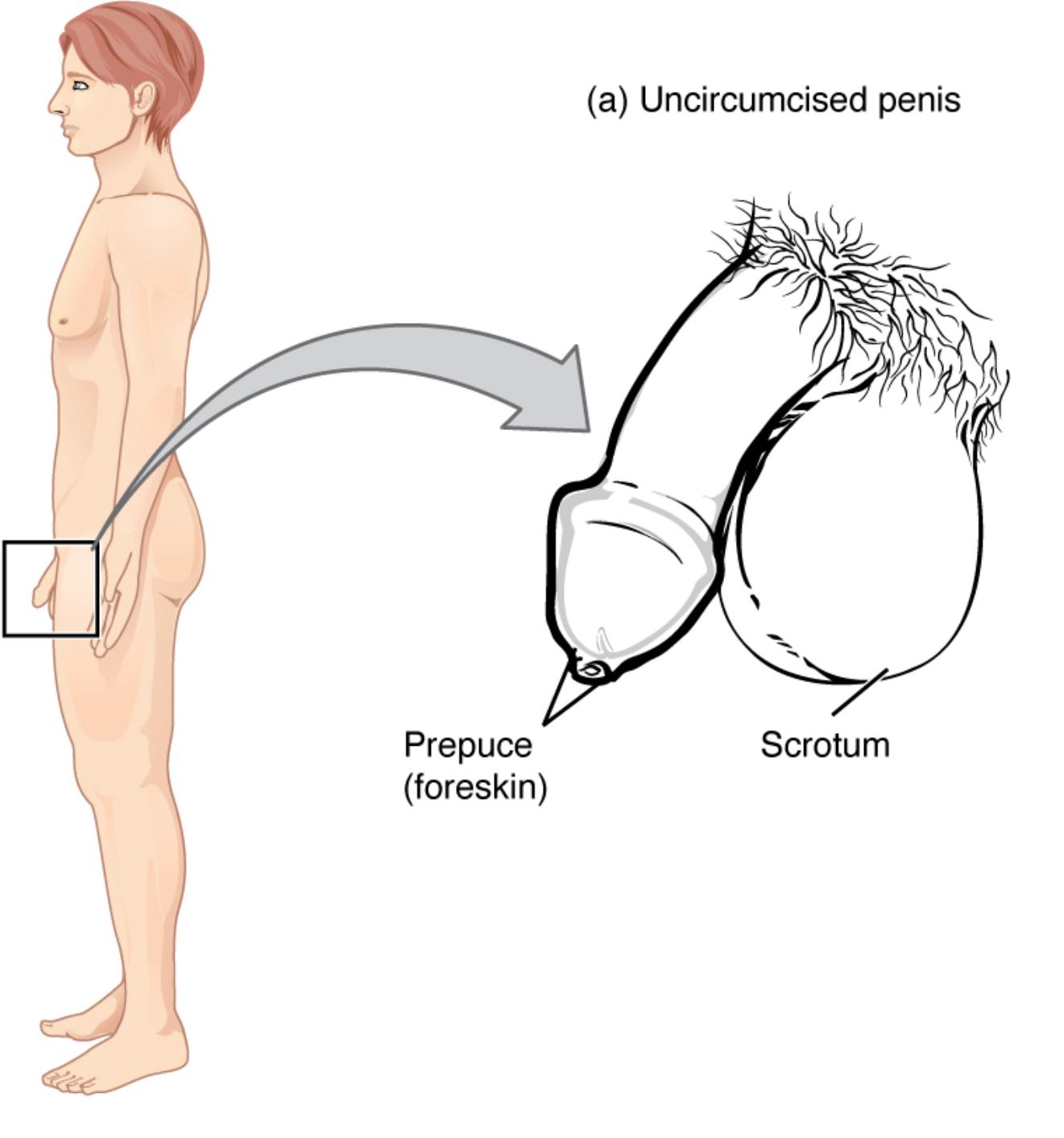
a) Uncircumcised penis: This illustration depicts the external appearance of an uncircumcised penis, which is characterized by the presence of a prepuce, or foreskin, covering the glans penis. This represents the natural anatomical state for males who have not undergone circumcision.
Prepuce (foreskin): A retractable fold of skin that naturally covers and protects the glans penis. In an uncircumcised individual, this skin can be moved back to expose the glans for cleaning or during sexual activity. Its presence is a defining characteristic of the uncircumcised penis.
Scrotum: A sac of skin and superficial fascia suspended inferior to the pubic symphysis and anterior to the anus. It contains the testes, epididymides, and the initial parts of the spermatic cords, maintaining a temperature suitable for spermatogenesis.
Understanding the Uncircumcised Penis
The diagram clearly illustrates the external anatomy of an uncircumcised penis, which is the natural anatomical configuration for males who have not undergone the surgical procedure of circumcision. The most distinctive feature highlighted is the prepuce, commonly known as the foreskin. This retractable fold of skin extends from the shaft of the penis and covers the glans penis, the sensitive tip of the organ.
The presence of the foreskin serves several physiological roles, including:
- Protection of the glans from trauma and environmental exposure.
- Maintenance of the natural moisture of the glans.
- Contribution to sexual sensation through its specialized nerve endings.
The ability to retract the foreskin is important for hygiene, allowing for proper cleaning of the glans and the subpreputial space. Understanding this natural anatomy is fundamental for healthcare professionals and for discussions regarding penile health, hygiene, and the decision-making process surrounding circumcision.
The Uncircumcised Penis: Anatomy, Function, and Clinical Considerations
The male external genitalia plays a vital role in both micturition and reproduction. The penis, specifically, is a complex organ whose external appearance can vary. This diagram provides a clear illustration of an uncircumcised penis, emphasizing the presence and characteristics of the prepuce, or foreskin. This natural anatomical state is found in males who have not undergone circumcision, a surgical procedure that alters this configuration.
The most prominent feature of the uncircumcised penis, as depicted, is the prepuce (foreskin). This is a double-layered fold of skin and mucous membrane that covers the glans penis, the sensitive tip of the organ. The foreskin is typically retractable in adults, allowing for exposure of the glans. Functionally, the foreskin offers a protective covering for the glans, shielding it from mechanical trauma, irritation, and dryness. It also helps to maintain the natural moisture and sensitivity of the glans. Furthermore, the foreskin itself contains specialized nerve endings that can contribute to sexual sensation. The ability to retract the foreskin is crucial for maintaining proper hygiene, as it allows for cleaning of the glans and the sulcus (the groove between the glans and the shaft) to prevent the accumulation of smegma and reduce the risk of infection.
Clinically, the uncircumcised penis is associated with specific considerations. Conditions such as phimosis, where the foreskin is too tight to retract, and paraphimosis, a more serious condition where a retracted foreskin cannot be returned to its normal position, are unique to uncircumcised individuals. These conditions can cause pain, inflammation, and in severe cases, restrict blood flow to the glans, requiring medical intervention. Regular hygiene practices, including gentle retraction and cleaning, are recommended to prevent potential issues. While discussions surrounding circumcision often involve debates about hygiene, disease prevention, and sexual sensation, this diagram focuses solely on the objective anatomical presentation of the uncircumcised state, serving as a foundational reference for understanding this aspect of male anatomy.
The scrotum, also indicated in the diagram, is a vital component of the male external genitalia, though it is distinct from the penis itself. This sac houses the testes, epididymides, and the initial portions of the spermatic cords. Its primary function is thermoregulation, maintaining the testes at a temperature slightly lower than core body temperature, which is optimal for viable sperm production. The anatomical relationship between the penis and scrotum is integral to the overall function of the male reproductive and urinary systems.
Conclusion
This diagram of the uncircumcised penis clearly illustrates its characteristic external features, particularly the presence and position of the prepuce or foreskin. Understanding this natural anatomical configuration is fundamental for a comprehensive appreciation of male anatomy, proper hygiene practices, and the clinical implications associated with its unique features. This visual serves as an important educational resource for anyone seeking to understand the diverse presentations of male external genitalia.


